
Last updated November 23, 2026
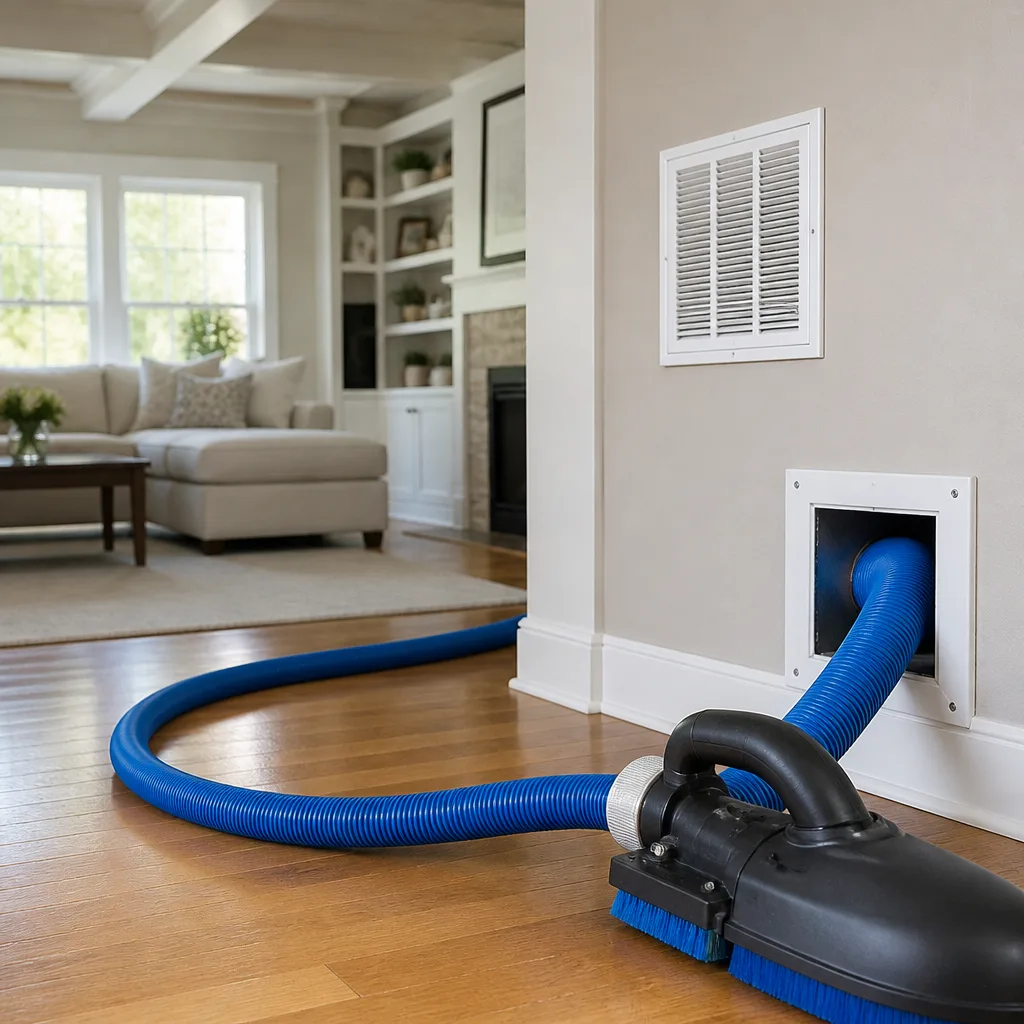 Whole-home duct cleaning
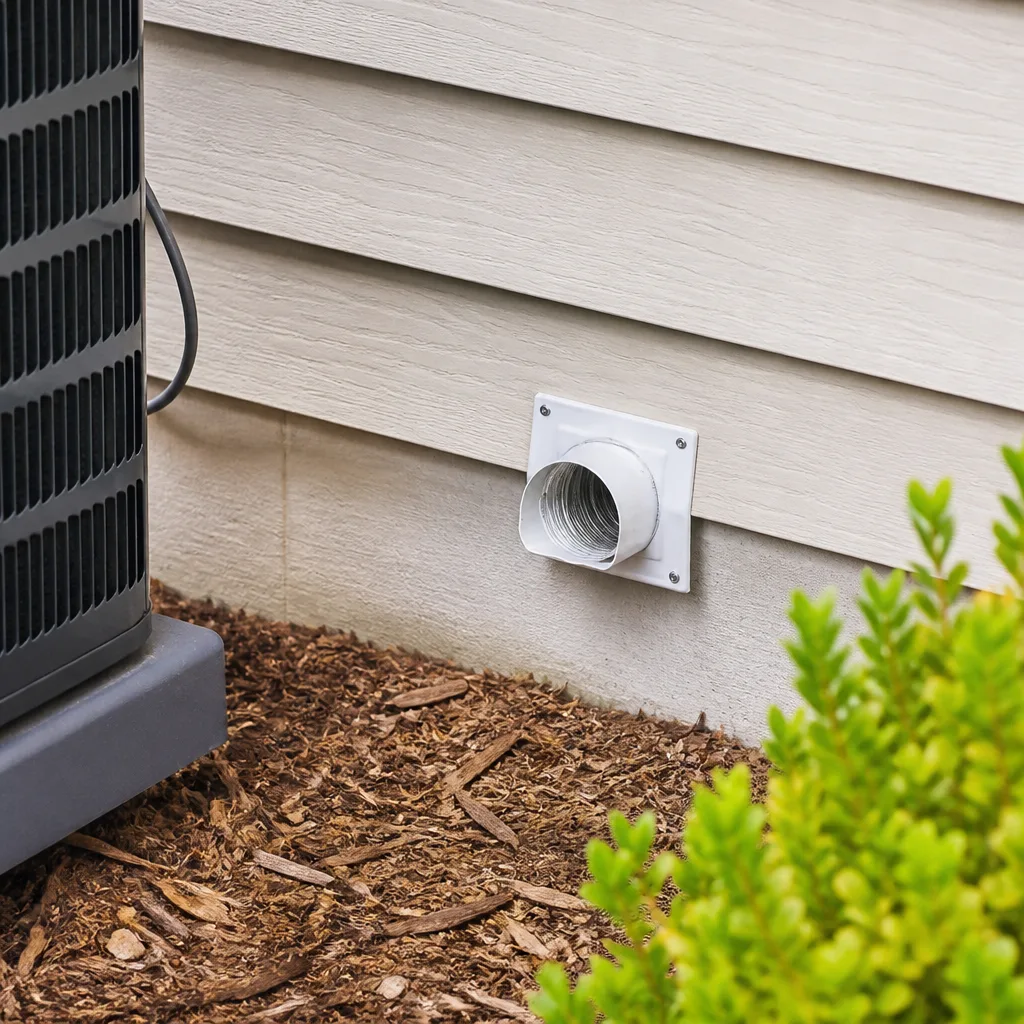 Dryer vent cleaning
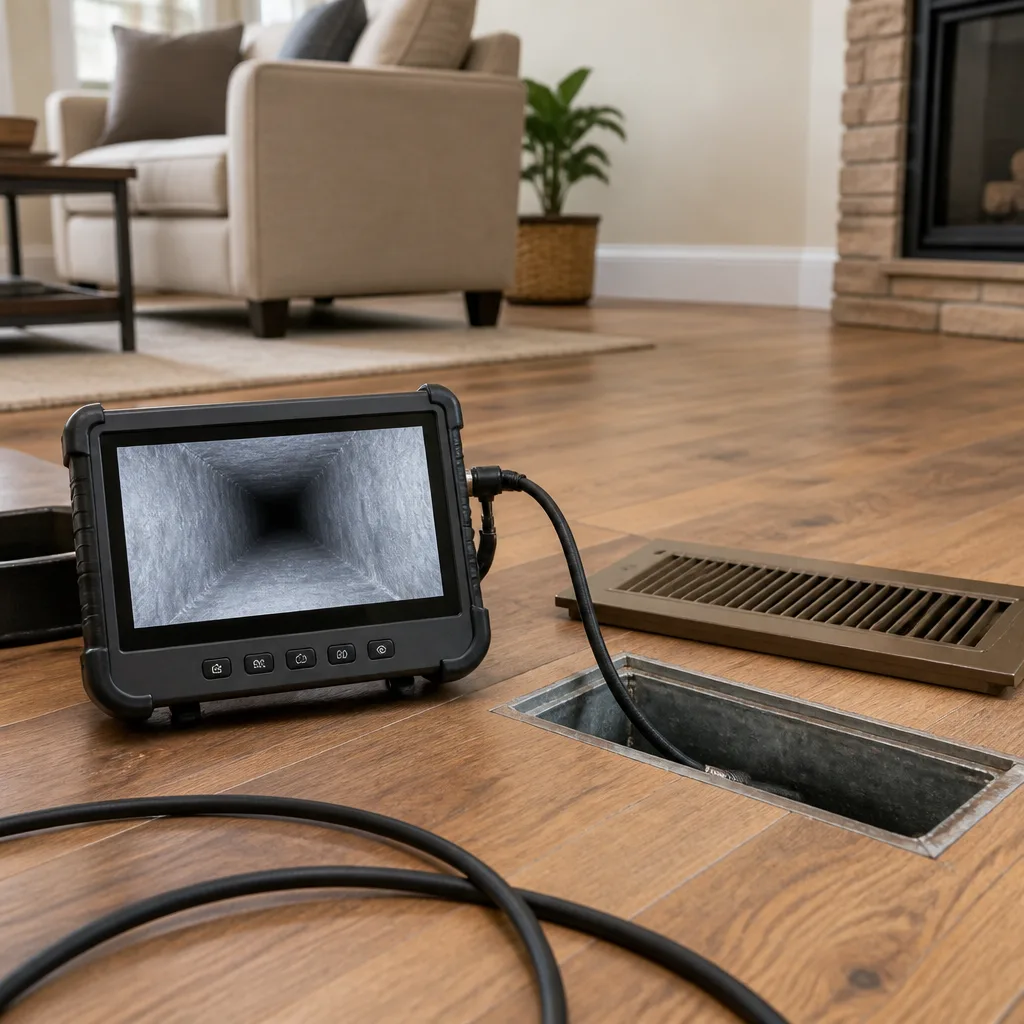 Camera inspection
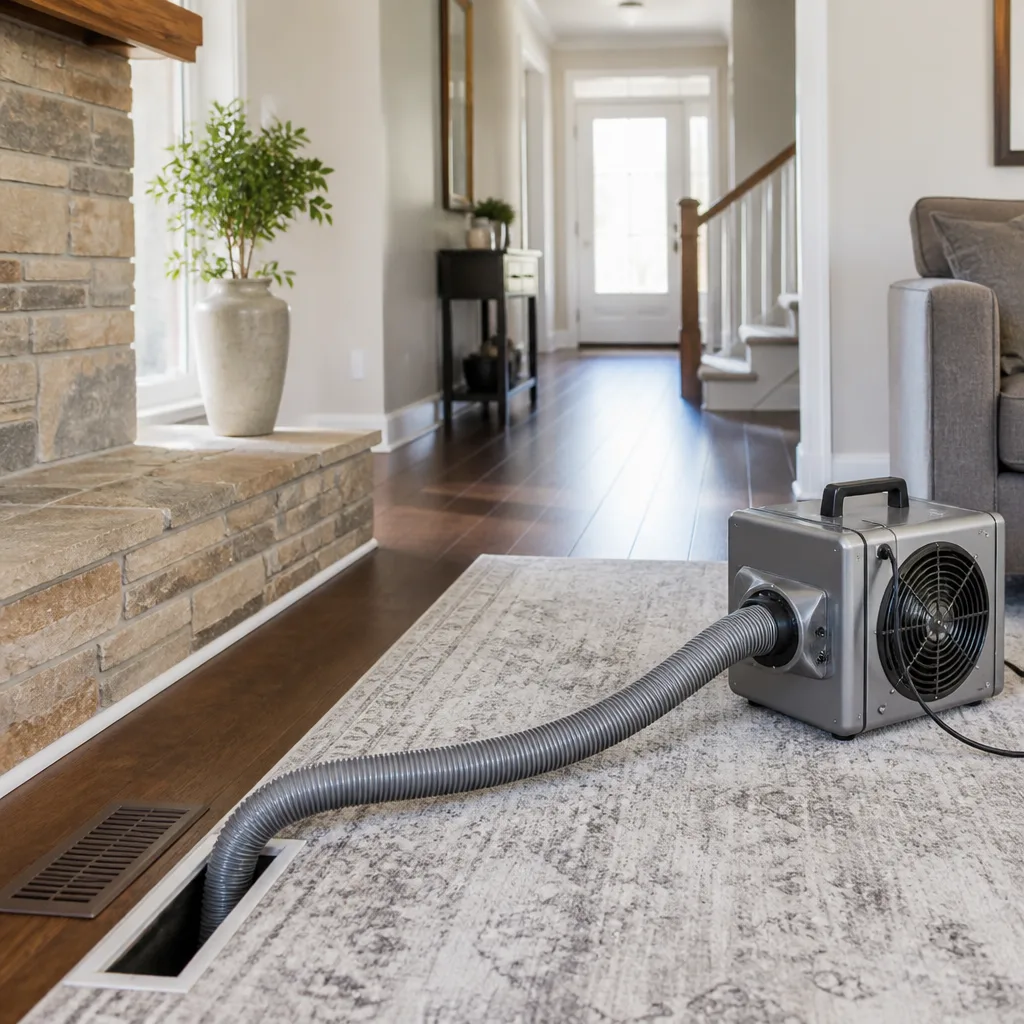 Sanitizing & deodorizing
Whole-system duct and dryer vent check with before-and-after photos - you see exactly what came out of your vents
That "$99 whole-house special" is a bait ad - the real number appears once they are in your hallway, or the "clean" is a shop-vac at the register. We photograph the inside of your ducts before and after instead.
Air Duct Cleaning Permits, Codes & Inspections in Cypress, CA: What You Need to Know
The cleaning itself doesn’t need a permit. The duct repair your technician notices and patches while they’re already inside the system? That’s a different answer, and it’s the line most homeowners don’t know exists. In Cypress, where a lot of the housing stock went up in the 1960s and 1970s with original sheet-metal ductwork still running through the attic and crawl space, we see the same pattern again and again: a routine cleaning turns up disconnected joints, crushed flex runs, or a patch of duct tape holding a seam that hasn’t actually been sealed since the Reagan administration. What happens next is where permits, codes, and liability enter the picture. This guide walks through California’s rules, the City of Cypress building department’s role, what legitimate duct repair documentation looks like, and how to protect yourself when selling a Cypress home.
Quick Answer
Air duct cleaning by itself does not require a building permit in California or in Cypress. Duct repair, duct replacement, or anything that modifies the HVAC system’s structure or its connection to the building generally does require a permit under the California Mechanical Code, and that permit is the property owner’s responsibility to obtain through the City of Cypress Building Division. If a contractor performs unpermitted duct work on your Cypress home, the liability for that work follows the property, not the contractor, and it typically surfaces during a home sale inspection.
Styles & brands we work with
- Whole-home duct cleaning
- Dryer vent cleaning
- Camera inspection
- Sanitizing & deodorizing
Table of Contents
- Cleaning vs. repair: where the permit line actually sits
- What California Title 24 governs for ducts
- Cypress building department: who has jurisdiction
- How to verify whether your project needs a permit
- The homeowner liability scenario at resale
- What legitimate duct repair documentation looks like
- Sanitizing, chemicals, and California disclosure rules
- What to expect when a Cypress inspector arrives
Cleaning vs. repair: where the permit line actually sits
We’ve seen a lot of confusion on this point, so let’s be direct: cleaning ducts removes debris. Repairing ducts changes the building’s mechanical system. Those are different activities in the eyes of the California Mechanical Code, and only one of them normally triggers a permit.
Here’s the practical split, based on how the work is generally categorized:
- Air duct cleaning (rotating brush and negative-pressure extraction through an existing, unmodified system): no permit required. You’re removing material, not altering the system.
- Register and grille removal and reinstallation that returns them to the same opening: typically no permit, because nothing in the system changes.
- Duct repair (reconnecting a disconnected joint, sealing a leak, replacing a short damaged run of the same material and size): often requires a permit depending on scope. The City of Cypress building department is the authority that makes the call for your specific project.
- Duct replacement or reconfiguration (new runs, resizing, rerouting, adding branches): generally requires a permit. This is a modification to the mechanical system.
- HVAC access modifications (cutting new access panels, changing plenum geometry, relocating equipment connections): generally requires a permit.
- Dryer vent cleaning: not a permit issue, but the vent’s length, material, and termination are all covered by code, and an inspector will look at them during any related inspection.
A meaningful amount of duct repair is small-scope work that falls in a gray zone. That’s why the honest answer to “does my project need a permit” is usually “call Cypress and ask.” You can reach the City of Cypress Building Division directly and describe the scope in plain terms. They’ll tell you whether it crosses the line. When we evaluate a Cypress home during air duct cleaning, we document what we find and separate cleaning from repair on the invoice, so you can take it to the building department if a permit needs to be pulled.
What California Title 24 governs for ducts
Title 24 is California’s building energy efficiency code, and for duct work it’s the most consequential document most homeowners have never heard of. Title 24 sets requirements for duct insulation, duct sealing, and system performance, and it uses those requirements to push California’s residential energy use down over time.
What Title 24 means for a Cypress homeowner in practice:
- Duct sealing is required in specific cases. When ducts are substantially replaced or altered, the code requires sealing of joints, seams, and connections, and often verification through a duct leakage test.
- Insulation values are specified. Ducts running through unconditioned attic space in Cypress homes must meet minimum insulation requirements. If a repair involves replacing an insulated run, the replacement has to match.
- Leakage testing may be required. On some alteration projects, a duct leakage test through a HERS rater is part of the permit close-out. This is not something a homeowner can do themselves.
- Compliance documentation follows the permit. If a permit is pulled for duct work under Title 24, the close-out documentation is what makes the file complete at resale.
Where Title 24 gets tricky is at the boundary: a minor repair that restores function may not trigger Title 24 compliance, while the “while we’re in there” impulse to redo a whole run does. The line isn’t always obvious, and it’s the reason we recommend documenting every repair with photographs, material specs, and a written scope before the work starts. Our HVAC cleaning visits frequently surface exactly this kind of borderline situation in older Cypress neighborhoods, especially around the original single-story tracts where flex duct was retrofitted decades ago.
Cypress building department: who has jurisdiction
The City of Cypress Building Division handles permits and inspections for mechanical work inside Cypress city limits. That includes duct repair, duct replacement, and HVAC system modifications that fall under the California Mechanical Code. For a Cypress residential project, this is your first call if you’re unsure whether a permit applies.
A few practical points about jurisdiction that trip people up:
- Cypress is a contract city with its own building department handling residential mechanical permits. If a contractor tells you “it’s a county thing, we don’t need a permit,” that’s the moment to verify with the city directly.
- Unincorporated areas nearby (parts of Orange County just outside Cypress city limits) fall under Orange County jurisdiction, with different submittal processes and different inspectors.
- HOA rules stack on top of building code. Many Cypress homeowners associations have additional requirements for exterior ductwork, roof penetrations, or equipment placement. Those are separate from permits and enforced separately.
- Light-commercial duct work in Cypress (small office suites, tenant improvements, restaurants) has stricter permit requirements than residential and often requires plan review, not just an over-the-counter permit.
To reach the City of Cypress Building Division, search the city’s official website for the Building Division and its permit counter contact information. Have your address, the proposed scope of work, and the contractor’s license number ready. We always recommend calling before the work starts, never after. When we perform duct repair and sealing on a Cypress home, we can walk through what falls in the permit zone so the homeowner can pick up the phone with the city informed.
How to verify whether your project needs a permit
Before any contractor starts duct repair on your Cypress home, verify the permit question yourself. It takes one phone call, and it protects you in ways a verbal promise from a contractor cannot. Here’s the process we recommend to every Cypress homeowner we work with:
- Write down the proposed scope in plain terms. “Reconnect the supply trunk to the main plenum” is clearer than “repair ducts.” Be specific about what will be cut, removed, added, or replaced.
- Call the City of Cypress Building Division. Describe the scope and ask two questions: does this require a permit, and if so, what type (mechanical permit, combination permit, plan review)?
- Ask who pulls the permit. In California, the contractor of record typically pulls the permit, but the property owner is legally the permit holder and bears the responsibility for close-out.
- Get the answer in writing. Even if the answer is “no permit required,” ask for a written confirmation email from the building department. Save it with your home records.
- Verify your contractor’s state license first. Every licensed contractor in California has a license number you can look up through the Contractors State License Board. If they can’t produce a license number, stop.
- Confirm the scope and the answers match. If the contractor’s written scope and the permit description diverge, you have a problem to solve before work begins, not after.
The most common failure we see is homeowners skipping step two because they trust the contractor’s opinion. That’s understandable, but the property owner carries the risk, not the contractor. When we spot repair work that crosses into permit territory during a cleaning in Cypress, we tell the homeowner and let them make the call. Being the bearer of that information is part of what a real inspection looks like.
The homeowner liability scenario at resale
Here’s the scenario worth understanding clearly, because it’s the one that actually costs Cypress homeowners money. A contractor performs duct repair without a permit. Years later, the house is listed for sale. A buyer’s home inspector walks into the attic, notes the shiny new ductwork, and asks for documentation. There isn’t any. That’s when the phone calls start.
What generally happens next:
- The city can require a permit retroactively. The property owner (the seller, not the original contractor) is the one who files and pays for the retroactive permit.
- Work may need to be exposed for inspection. If the ducts were sealed up in drywall or insulated over, the seller may need to open the ceiling so an inspector can verify the installation.
- The sale can be delayed. Real estate contracts commonly include provisions for unpermitted work to be corrected or disclosed. Either path slows the transaction.
- Liability rarely travels back to the contractor. Once the work is done and the contractor is paid, holding them responsible years later is difficult, especially if the contract was vague about scope.
- The liability is on the property title. In California, unpermitted work attaches to the property record. The seller cannot simply walk away from it by claiming they didn’t know.
Cypress has a lot of homes from the 1960s and early 1970s where multiple generations of ductwork have been layered in. The audit trail on those homes is often messy already. Adding another unpermitted repair makes it worse. When we perform dryer vent cleaning or full-system work on a Cypress home that’s about to go on the market, we flag any repair documentation gap we find so the homeowner can sort it before the buyer’s inspector does.
What legitimate duct repair documentation looks like
The single most useful anti-liability habit for a Cypress homeowner is demanding documented repair work, kept separate from the cleaning invoice. A cleaning is a cleaning. A repair is a construction activity. They belong on different pieces of paper, and the repair paper needs to be more than a line item.
Legitimate duct repair documentation includes:
- A written scope separate from the cleaning invoice. It names the specific ducts repaired, the materials used, the sealant product name, and what was added or replaced.
- Before-and-after photographs. Not marketing shots, actual record photos of the repaired section, dated, with the location noted (e.g., “supply trunk, rear attic, second branch”).
- Material specifications. The duct material, insulation R-value if insulated, and the sealant or mastic brand used. This matters if you later need to demonstrate Title 24 compliance.
- The contractor’s state license number on the document. A real repair document always carries the license number of the company that performed the work.
- Permit number, if a permit was pulled. If it wasn’t required, a written note stating “no permit required per City of Cypress Building Division, [date]” is worth keeping with the home records.
- A separate line for any sanitizing or antimicrobial treatment. That belongs on its own invoice line with the product name and application method, which we’ll get to next.
When we perform Duct Repair & Sealing on a Cypress home, the repair documentation is provided as a separate written record with photographs and material specs. This is also the moment we integrate products like Aprilaire filtration or Honeywell controls if the homeowner wants to improve system performance after the repair.
Sanitizing, chemicals, and California disclosure rules
Air quality and sanitizing treatments used in HVAC systems are regulated as pesticide applications in California when the product is registered as an antimicrobial. That single fact catches most homeowners by surprise. It means the products themselves fall under California Department of Pesticide Regulation rules, and the disclosure requirements around their use are real, not optional.
What Cypress homeowners are entitled to know before any sanitizing application:
- The exact product name. Not a marketing category like “hospital-grade sanitizer” or “anti-microbial fog.” The registered product name, as it appears on the label.
- The application method. Which surfaces were treated, in what volume, via what equipment. Fogging the ductwork is technically distinct from wiping and fogging the air handler coil.
- The label’s safety data and any use restrictions. California DPR requires products to be used per label. If the label says “not for use in occupied spaces” or “re-entry time is X,” that controls the schedule.
- Whether a HEPA containment system was used during application. Deploying Abatement Technologies air-scrubbing equipment during sanitizing treatments keeps particles inside the work zone instead of spreading them through the house.
- Whether the homeowner (or anyone in the house) has a medical condition, allergy, or chemical sensitivity that should be disclosed to the technician in advance. This is a conversation that should happen before the work begins.
The sanitizing pass is a distinct layer from cleaning, and it should always be documented as its own line on the invoice with the product name. When we deploy Guardsman-brand sanitizing products during Air Quality & Sanitizing treatments, the product name, method, and application record go on the invoice, and we walk through the label with the homeowner before we apply anything. Nikro equipment handles the extraction and containment during the cleaning phase so the sanitizing product lands on a clean surface.
What to expect when a Cypress inspector arrives
If a permit was pulled for duct repair or replacement on your Cypress home, an inspector from the City of Cypress Building Division will visit at some point during or after the work. What they check depends on the permit type, but the process follows a fairly predictable pattern for residential mechanical work.
A typical residential mechanical inspection for duct work covers:
- The physical installation. Duct material, sizing, support, and slope are checked against the approved plans or the manufacturer’s instructions.
- Sealing. Joints, seams, and connections must be sealed per Title 24 requirements. Mastic or approved sealant only; duct tape alone is not compliant.
- Insulation. Ducts running through unconditioned attic or crawl space in Cypress homes must meet the required R-value, and the inspector will verify the material.
- Leakage testing (if required). A HERS rater performs the duct leakage test and submits the result to the city. The permit cannot be closed without that document.
- Access and safety. Combustion air, clearances, and physical access to equipment are checked. Ducts must not obstruct safe egress or combustion air.
When we perform the cleaning and repair work, we leave an access point in good condition so the inspector can see what they need to see. We also take photos of the sealed ducts before insulation goes back on, which often saves a second visit. If the city asks for a specific verification, we work with the homeowner to make it happen.
Common Mistakes to Avoid
- Assuming “it’s just a repair” means no permit. A repair that reconnects a trunk or replaces a section of duct is often permit territory. Call the City of Cypress Building Division before, not after.
- Accepting a verbal “no permit needed” from the contractor as final. The property owner carries the liability, and only the city can confirm whether a permit applies to your specific scope.
- Letting duct repair get invoiced as a line item on the cleaning bill. A cleaning and a repair are two different activities. Ask for separate written documentation on the repair.
- Using duct tape to seal seams. It isn’t Title 24 compliant and it doesn’t last. Any contractor who seals with duct tape alone is telling you something about the quality of the rest of the work.
- Not asking for the sanitizing product name. California DPR rules require the registered product name and label compliance. If the contractor can’t name it, don’t let them apply it.
- Ignoring the ductwork documentation gap before selling a Cypress home. An unpermitted repair discovered by a buyer’s inspector is the seller’s problem to solve, and it delays closings.
- Skipping the CSLB license check. A contractor who can’t produce a license number for the repair work should not be in your ductwork. Look it up.
See the difference
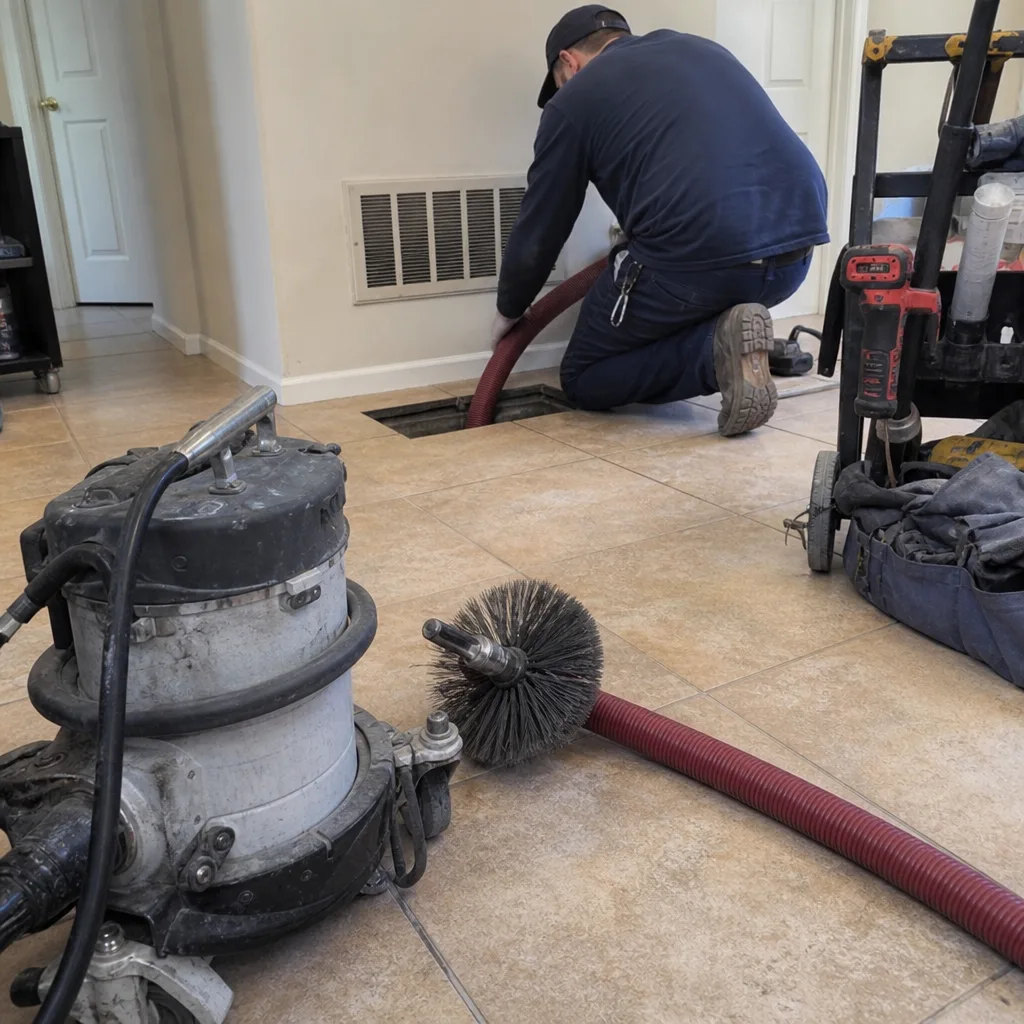 Before
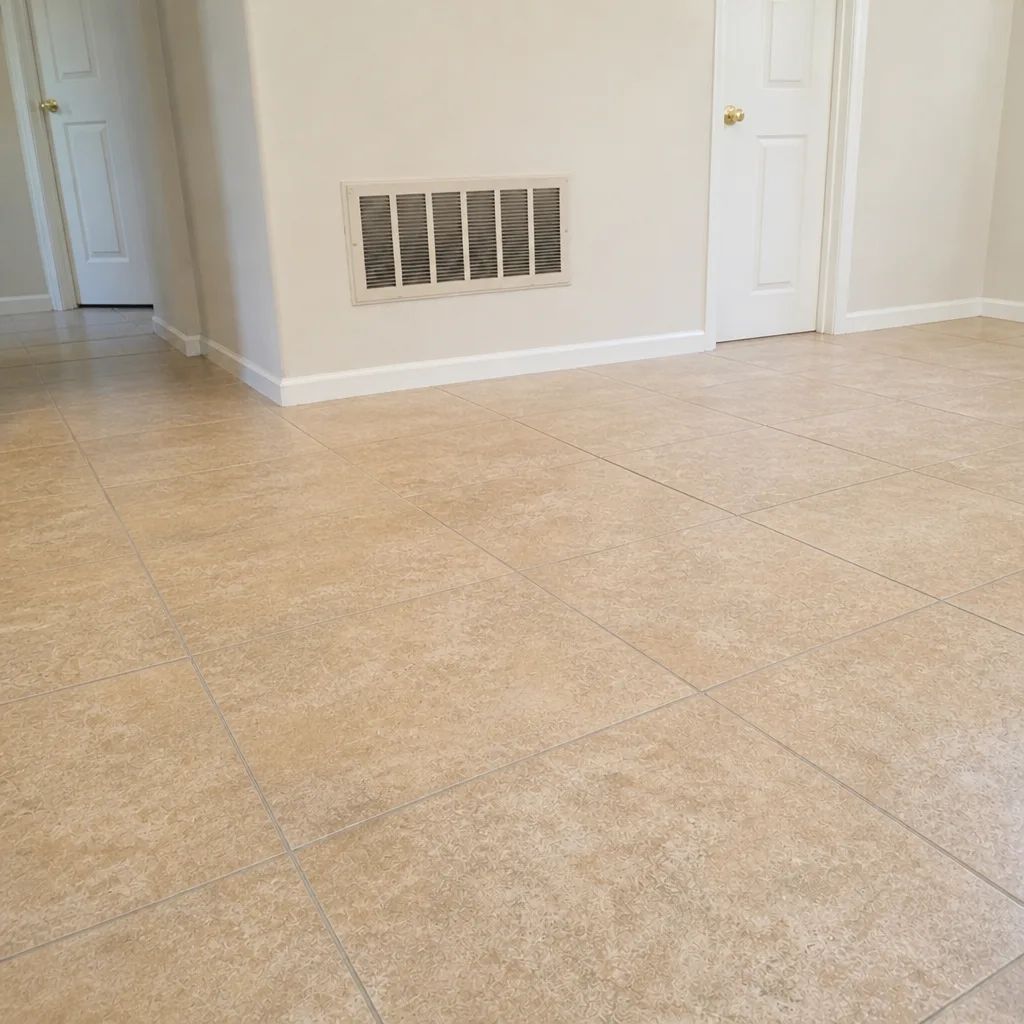 After
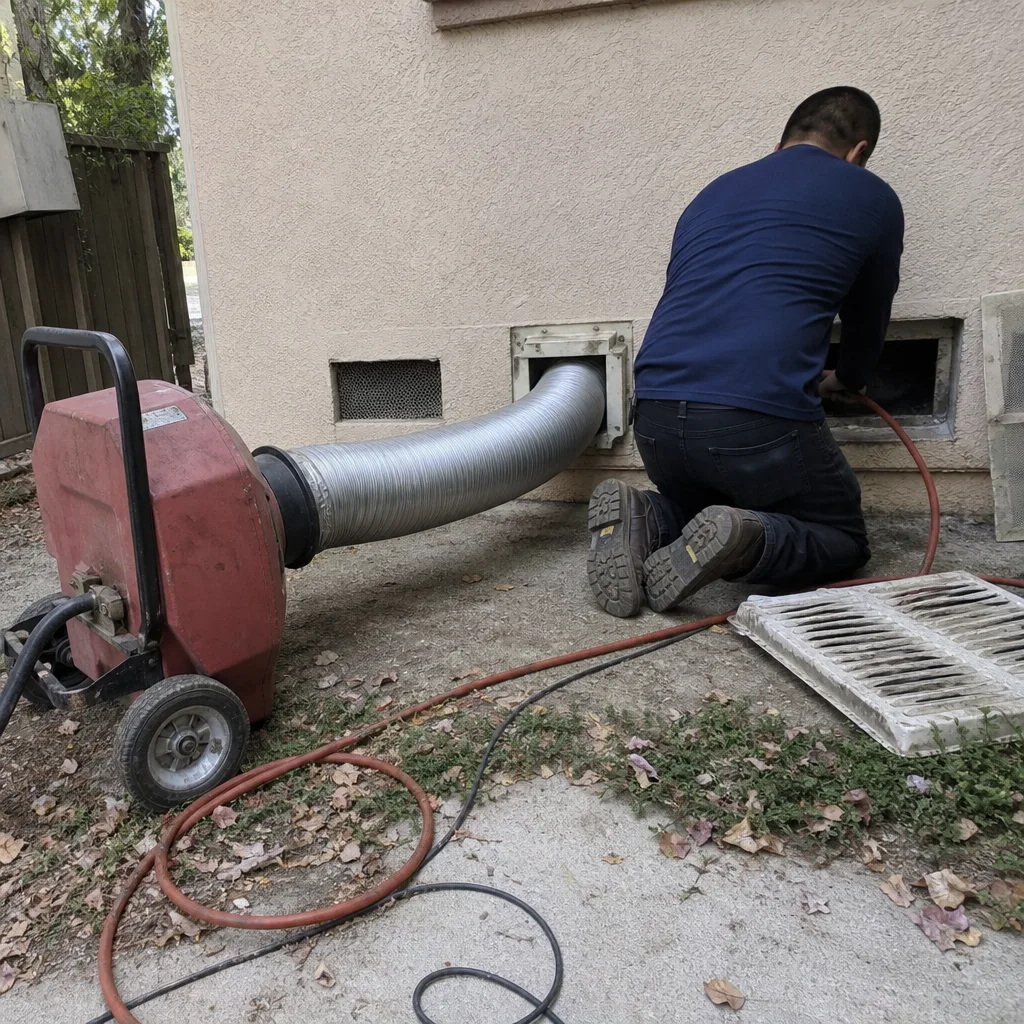 Before
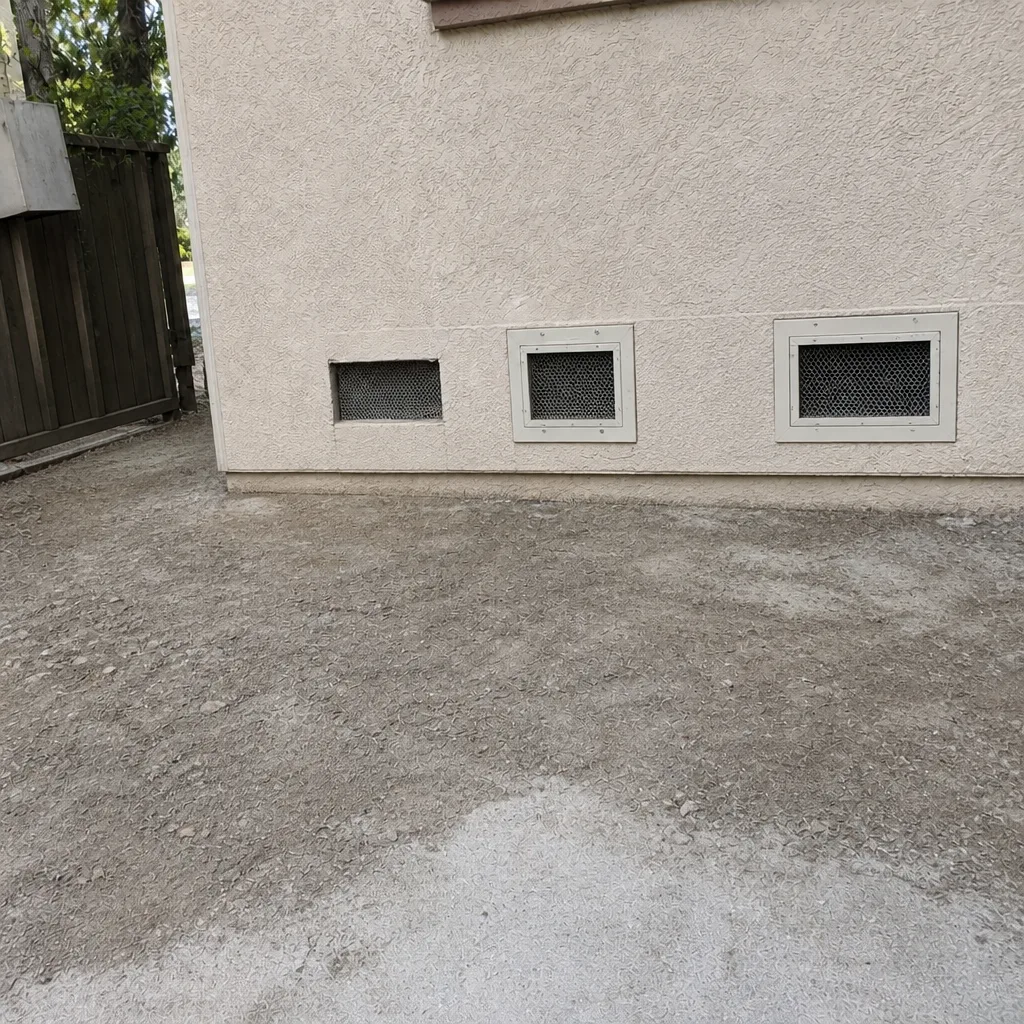 After
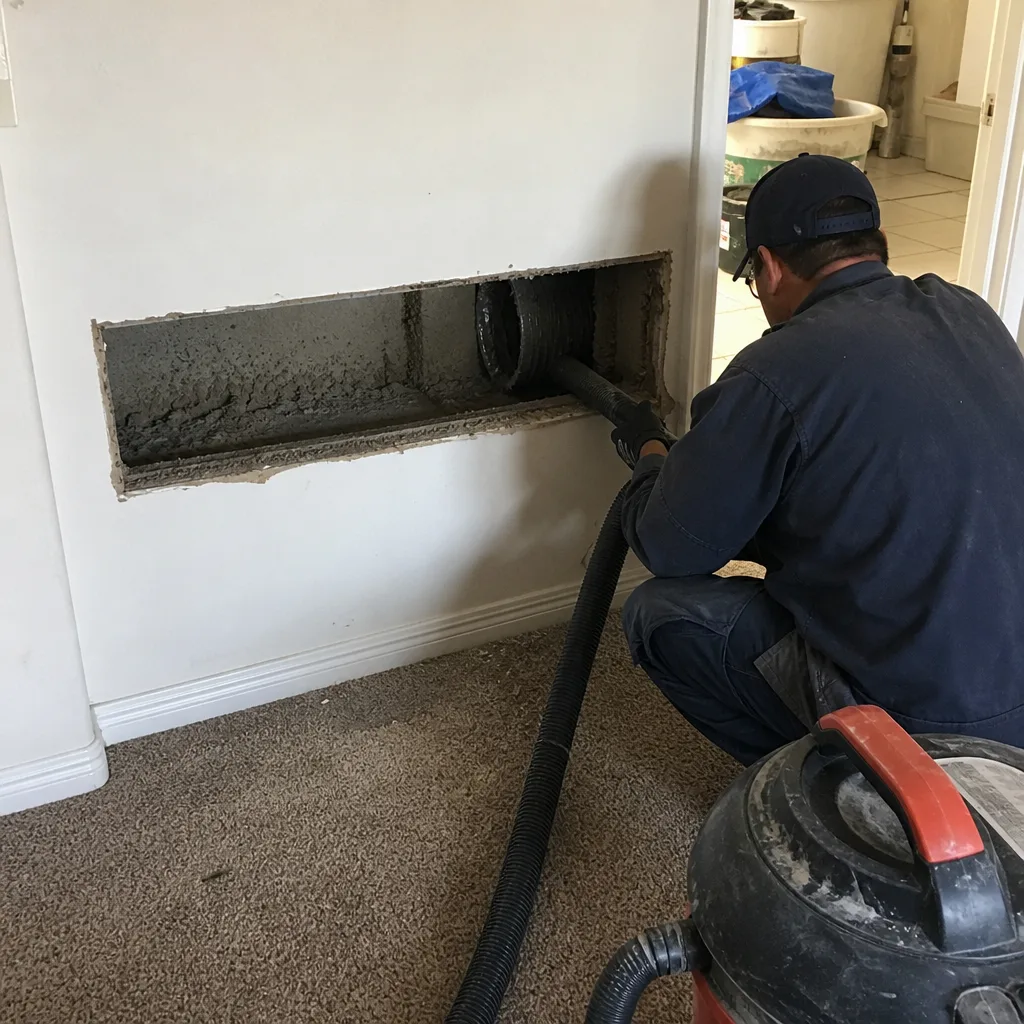 Before
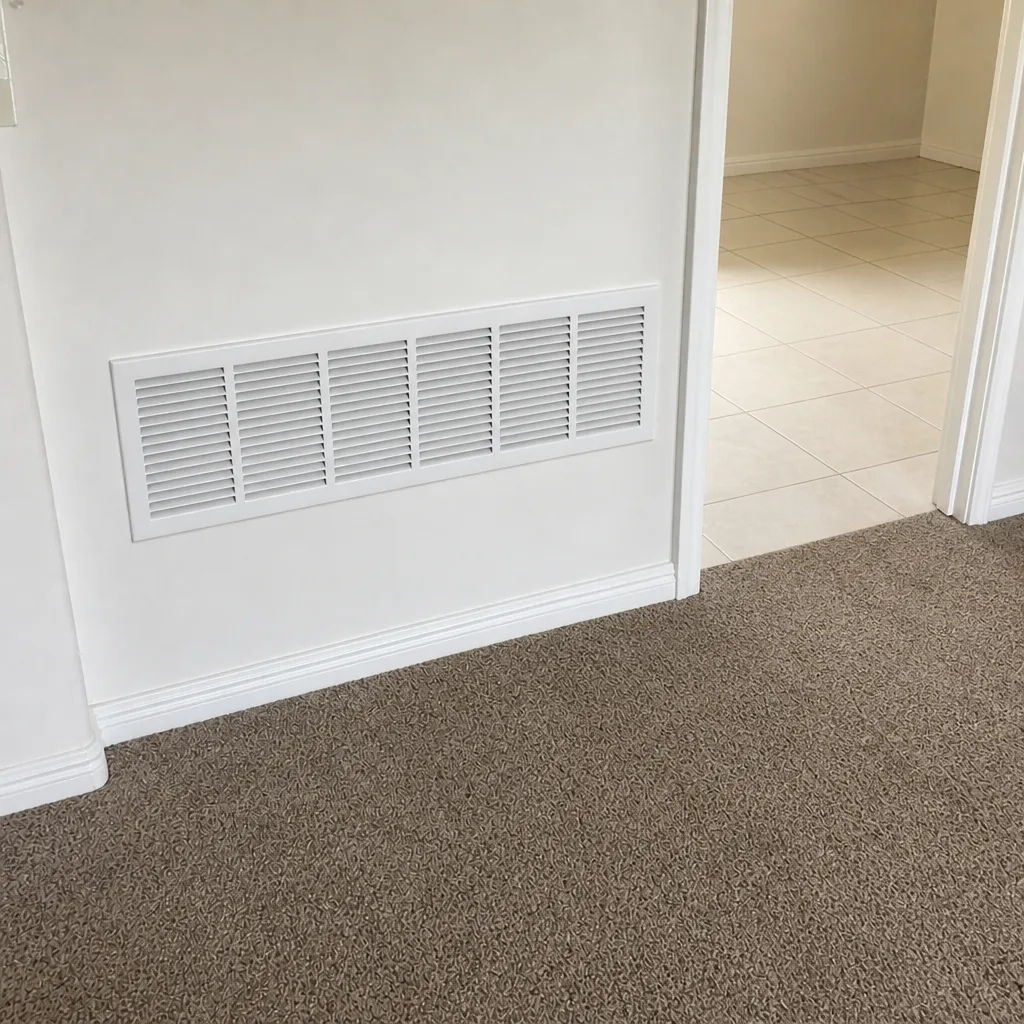 After
When to Call a Professional
Call a professional when the work involves any of the following: unpermitted duct repair that surfaced during a home inspection, a Title 24 compliance question about whether your repair needs leakage testing, a suspected disconnected or crushed duct found during cleaning, an HVAC system running harder than it used to (often a sign of duct leakage), musty odors that don’t go away after cleaning, or a sanitizing question about what product was used on your system previously. These are not tasks to sort out with duct tape and a shop vac. The paperwork alone will protect you, and the equipment matters too. We use professional-grade Rotobrush and Nikro systems, and we treat the whole airflow path, not just the registers. Cypress Air Duct Cleaning Co offers free estimates in Cypress. Call (844) 625-7168. We answer 24/7. Fast dispatch from 7am to 7pm, Sunday through Friday. The estimate is free, and the written estimate sets the final price, one flat price per system agreed before work starts.
Frequently Asked Questions
No. Air duct cleaning itself does not require a permit in Cypress or anywhere else in California, because cleaning removes debris without altering the mechanical system. The permit question is linked to repair, replacement, or reconfiguration of the ducts. If your technician finds something during cleaning that needs repairing, separate the two activities and check with the City of Cypress Building Division on whether the repair crosses the permit line. Call (844) 625-7168 for an exact quote on the cleaning, estimates are free.
Title 24 applies to duct work when the work is substantial enough to count as an alteration. Small repairs that restore function may not trigger Title 24, while replacement of a duct run or reconfiguration generally does, including duct sealing requirements and possibly leakage testing by a HERS rater. The specific answer depends on the scope. Your contractor and the City of Cypress Building Division can confirm whether your repair triggers Title 24 compliance, so call (844) 625-7168 and we can walk through the scope with you before work starts, and the written estimate sets the final price.
The seller is responsible, because unpermitted work attaches to the property, not the contractor who performed it. When a buyer’s home inspector finds unpermitted duct work, the seller typically must either correct the work retroactively (pull a permit, potentially expose ducts for inspection) or disclose it and negotiate with the buyer. Holding the original contractor liable years later is difficult unless the contract was specific. Document your repair work at the time it’s done, separate from the cleaning invoice, and you’ll be protected. Call (844) 625-7168 for a free estimate and we’ll walk through what documentation you should have on record.
Products used as antimicrobials in HVAC systems are regulated as pesticides in California under the Department of Pesticide Regulation, and the homeowner is entitled to know the exact registered product name, the application method, and the label-required safety information before the treatment is applied. A contractor who can’t name the product should not be applying it. When we deploy sanitizing products during Air Quality & Sanitizing treatments, the product name and application record go on the invoice. Call (844) 625-7168 if you have questions about what was used on your system previously, and the estimate for a fresh assessment is free.
An inspection every time the system is serviced is reasonable, and a dedicated duct inspection makes sense whenever you notice symptoms: higher dust, musty odors, uneven room comfort, or an HVAC system that’s running harder than it used to. Cypress homes from the 1960s and 1970s with original or retrofitted ductwork benefit from a documented baseline inspection so future work has a comparison point. Call (844) 625-7168 for a free estimate and we’ll scope the inspection based on your system.
Cheap quotes usually leave things out: the permit (if one is required), the repair documentation, the separate sanitizing line, and often the equipment quality. When a contractor quotes low and then discovers a permit is needed mid-job, that extra cost lands on you, and it’s rarely in writing. Legitimate work is one flat price per system agreed before work starts, a written estimate that sets the final price, and documentation that survives a home inspection. Call (844) 625-7168 for an exact quote and a written scope, and we’ll tell you upfront what permit questions to take to the city.
The Bottom Line
The cleaning doesn’t need a permit. The repair might. That’s the line worth remembering. In Cypress, the City of Cypress Building Division is the authority on whether a specific duct repair crosses into permit territory, Title 24 governs the sealing, insulation, and leakage testing requirements that follow a permitted job, and the homeowner – not the contractor – carries the liability if the paperwork isn’t done right. Demand written repair documentation separate from the cleaning invoice, ask the exact sanitizing product name under California DPR rules, and keep the records with the home. Three phone calls (contractor, city, license board) protect you at resale. Everything else is mechanical.
If you want a professional inspection to see where your ducts actually stand, call (844) 625-7168. We answer 24/7. Fast dispatch from 7am to 7pm, Sunday through Friday. The estimate is free, the price is one flat rate per system agreed in writing before work starts, and we document what we find with photographs. From our perspective at Cypress Air Duct Cleaning Co, the goal is a Cypress home that passes inspection and a homeowner who understands the difference between a cleaning and a permit.
Written by the team at Cypress Air Duct Cleaning Co.