
Last updated November 23, 2026
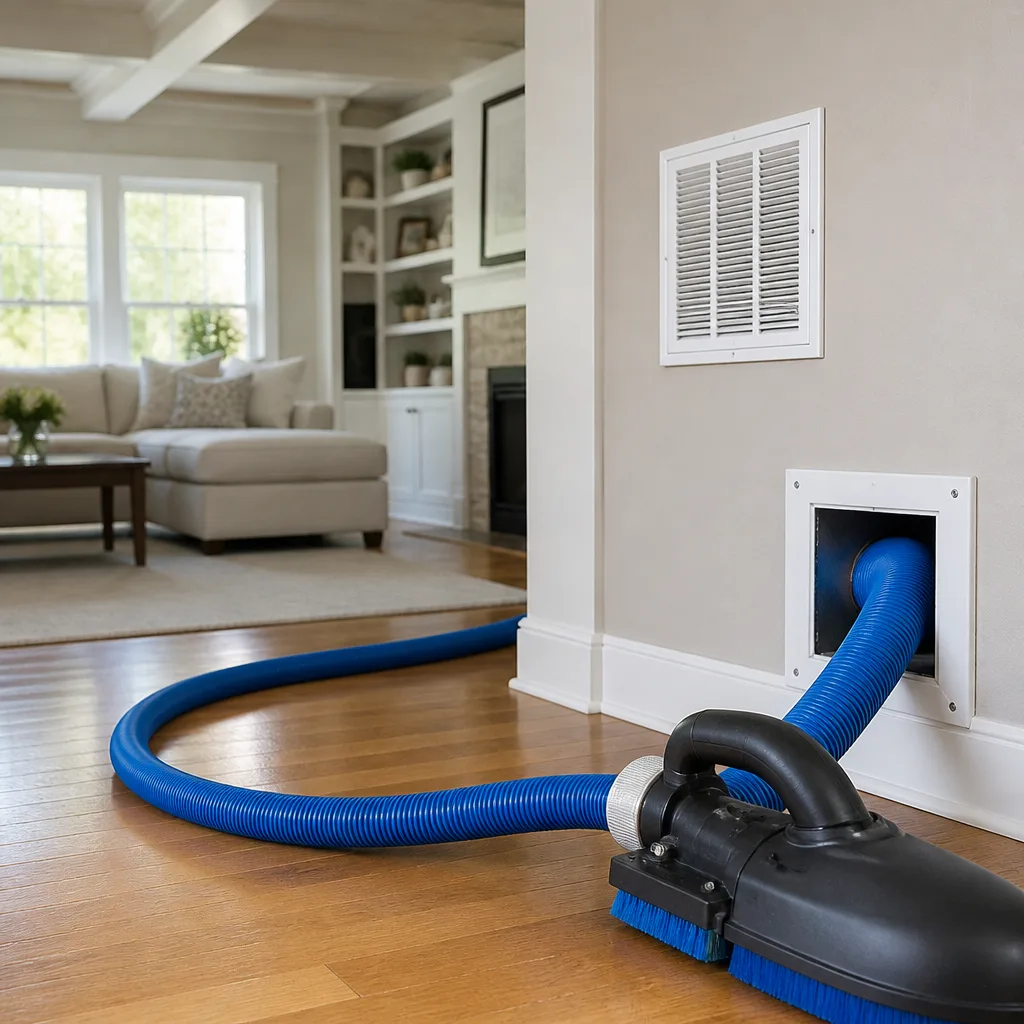 Whole-home duct cleaning
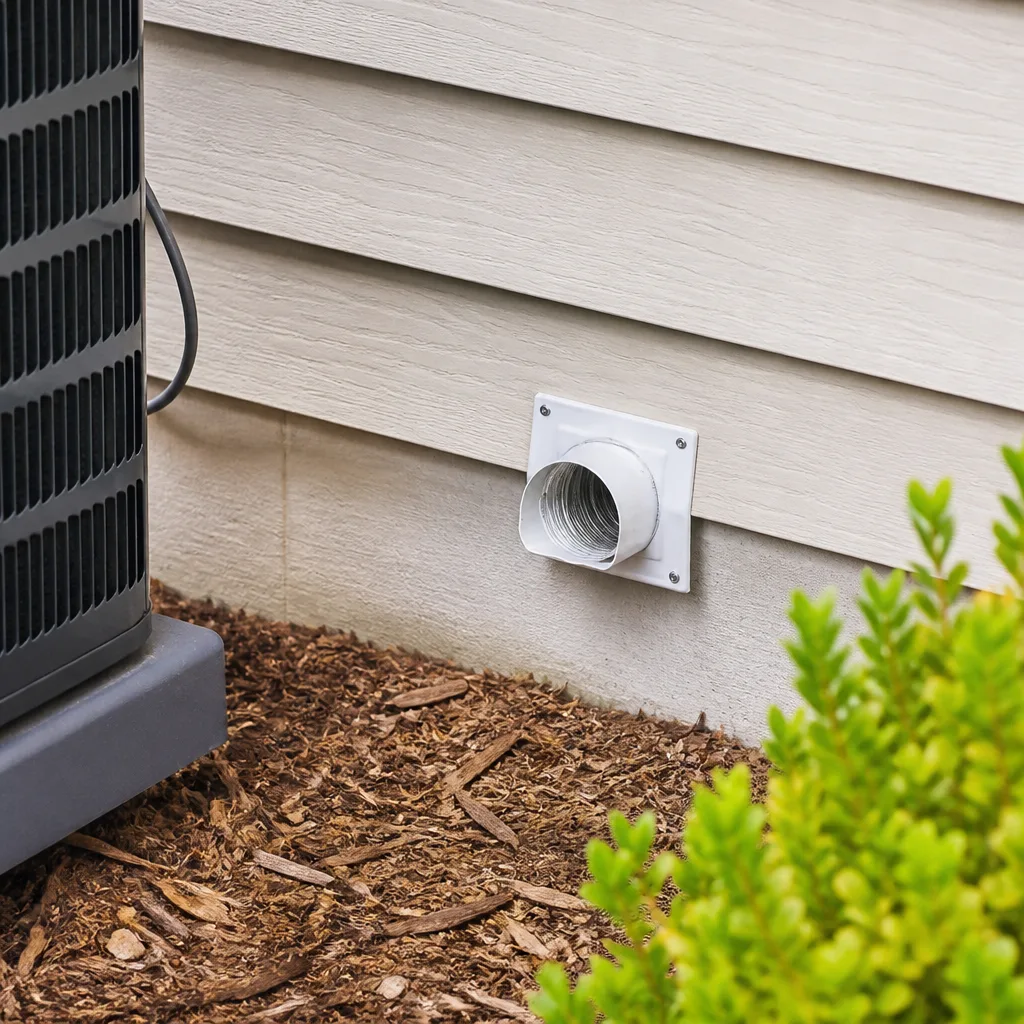 Dryer vent cleaning
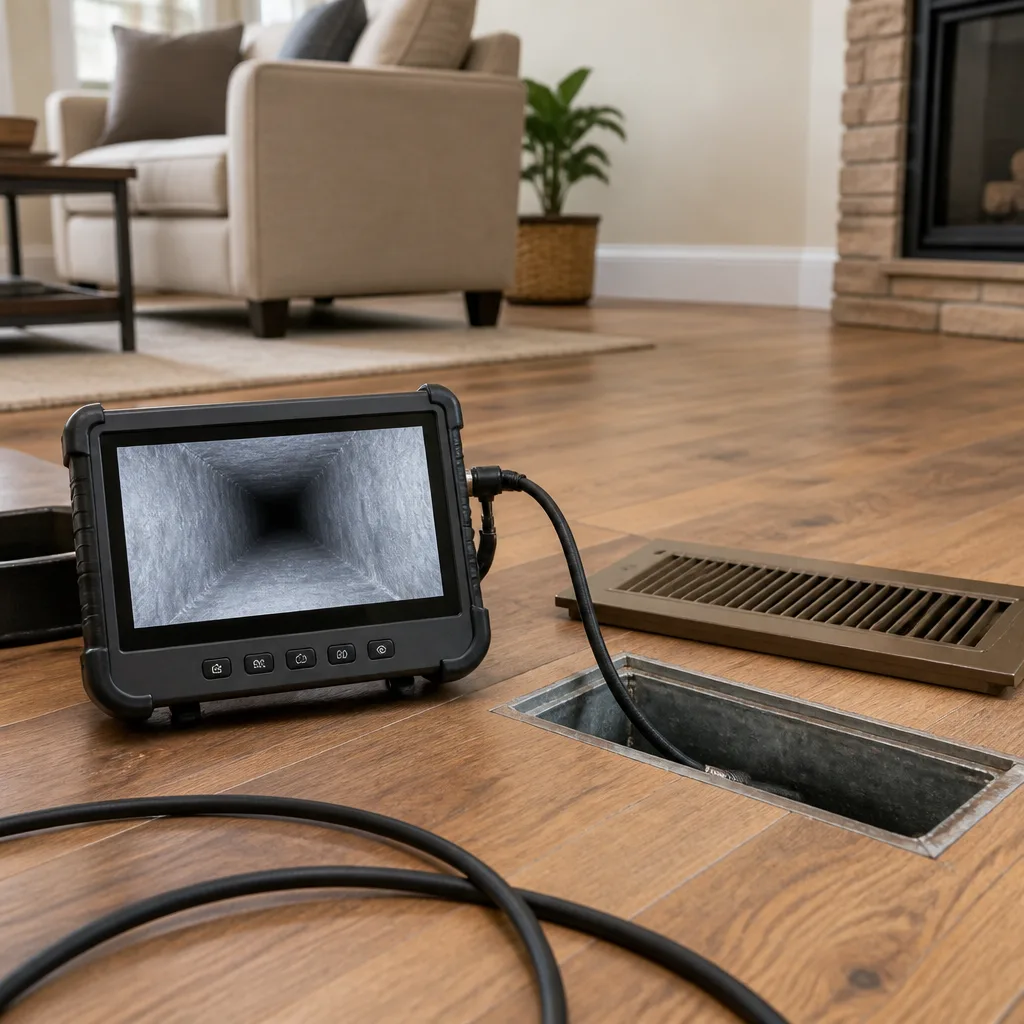 Camera inspection
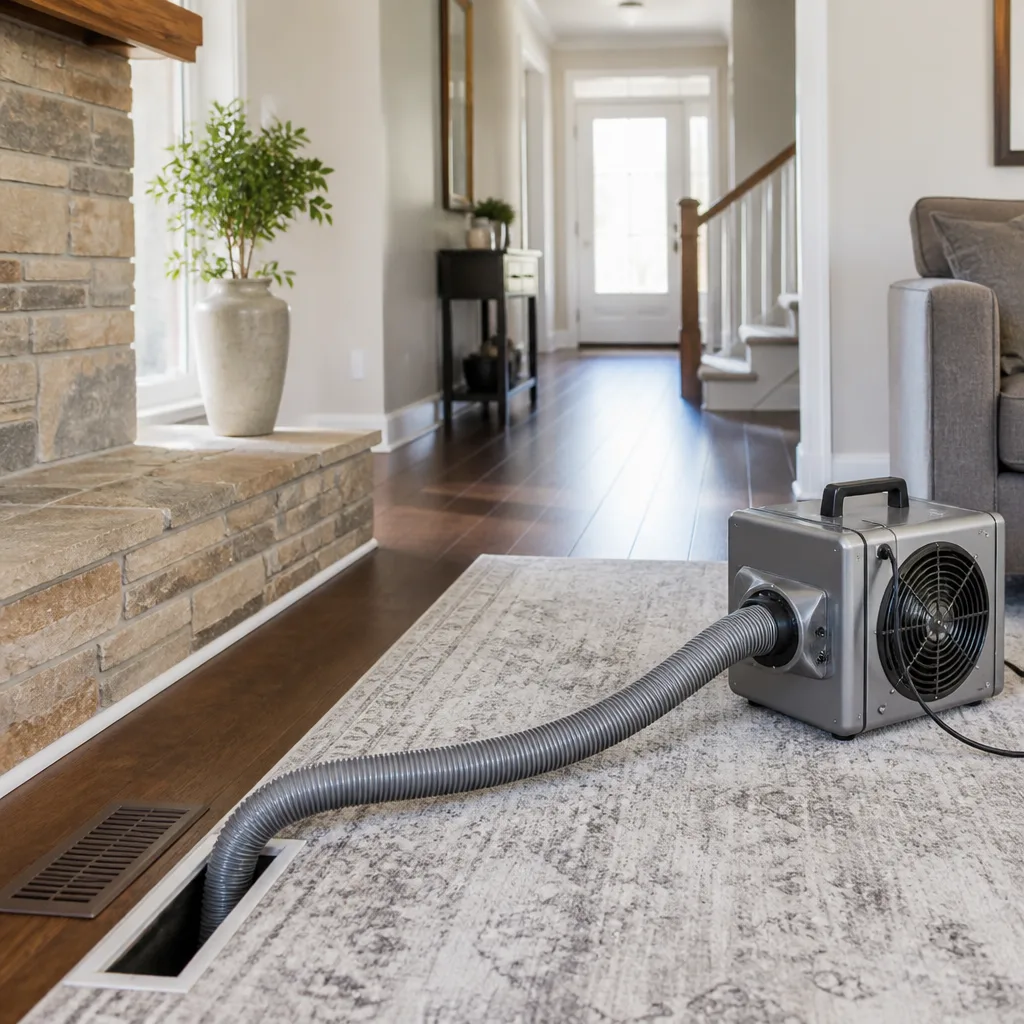 Sanitizing & deodorizing
Whole-system duct and dryer vent check with before-and-after photos - you see exactly what came out of your vents
That "$99 whole-house special" is a bait ad - the real number appears once they are in your hallway, or the "clean" is a shop-vac at the register. We photograph the inside of your ducts before and after instead.
DIY vs Professional Air Duct Cleaning: The Cypress Homeowner’s Decision Guide
Every consumer duct cleaning kit sold online is technically functional. It’s also designed to operate at roughly 1/20th the negative pressure of professional systems, which means that when you run one, you’re moving debris around inside the duct rather than pulling it out of the house. That single number explains most of the difference between a weekend project and a real cleaning. In this guide we’ll map exactly what a homeowner can accomplish with store-bought tools, where the effort falls apart, and why the equipment gap matters more than how hard you’re willing to work. We’ll also cover the dryer vent, the one part of the system where DIY often makes sense. We’re writing this from Cypress, where we handle air duct cleaning for local homes.
Quick Answer
DIY air duct cleaning can handle surface dust at the registers and a first pass on the accessible run near each vent, which is roughly 15% of what a full cleaning involves. Professional cleaning is the right call when you’re dealing with mold, pest contamination, post-renovation debris, or system-wide dust that keeps coming back, because only a high-powered vacuum and rotating brush can capture debris instead of stirring it into the air you breathe. Everything in between depends on five questions, which we lay out below.
Styles & brands we work with
- Whole-home duct cleaning
- Dryer vent cleaning
- Camera inspection
- Sanitizing & deodorizing
Table of Contents
- What DIY Duct Cleaning Can Actually Accomplish
- The Equipment Gap in Concrete Numbers
- When DIY Makes Things Worse
- The Dryer Vent: Your Strongest DIY Case
- Five Questions to Answer Before You Decide
- A Step-by-Step Walkthrough of the DIY Approach
- What a Professional Cleaning Actually Involves
- Common Mistakes to Avoid
What DIY Duct Cleaning Can Actually Accomplish
Start with an honest inventory. A homeowner with a vacuum, a long flexible brush, and a screwdriver can legitimately do three things well.
- Clean the registers and grilles. Dust collects on the face of every supply and return register. Remove the screws, wash the grille in a sink with warm soapy water, dry it fully, and reinstall. This is real work with a real result.
- Reach the first few feet of each branch run. Most supply runs branch off a main trunk and travel a short distance to the register. A flexible brush on a drill or a shop vacuum with a long hose can loosen surface dust in that accessible section.
- Pull lint from the dryer vent. The run from the back of the dryer to the exterior cap is reachable with a vent brush kit, and lint removal there genuinely reduces fire risk. More on that below.
What DIY cannot do is clean the trunk line, the plenum above the air handler, the interior of the evaporator coil, or the far reaches of long runs where a brush simply won’t travel. Those areas hold the bulk of accumulated dust in a Cypress home, especially in properties near the older residential blocks around Lincoln Avenue and Valley View Street, where ductwork from earlier decades often has longer and more convoluted runs.
And here’s the part most guides skip: when you dislodge dust in a duct and don’t capture it, it re-enters the living space through the nearest open register. The work feels productive. The air gets worse before it gets better, and sometimes it doesn’t get better at all.
The Equipment Gap in Concrete Numbers
This is where the decision actually gets made. A shop vacuum rated for garage use moves roughly 100 to 200 cubic feet per minute at the hose, and it loses suction fast through a long, narrow hose. A professional duct cleaning system built by a manufacturer like Nikro pairs a high-volume vacuum with a rotating brush and a sealed hose connection, and it’s designed to maintain strong negative pressure at the far end of a 50-foot run.
The practical difference comes down to three things:
- Air volume at the working end. Professional systems hold hundreds of CFM at the brush head, not at the motor. That sustained airflow is what carries dust out of the duct instead of letting it settle back down behind the brush.
- Negative pressure inside the system. When a professional connects the vacuum to the trunk line and seals the registers, the entire duct system goes into negative pressure. Air moves inward through every gap. Dust has one direction to travel: out.
- Containment. Companies that take air quality seriously run air-scrubbing equipment during the job. We deploy Abatement Technologies air scrubbers on our cleaning visits for exactly this reason: to hold particulate levels down while the ducts are being agitated.
The typical homeowner setup has none of these. A shop vac connected to one register while all the others stay open is pulling from the entire house, not from the duct. The pressure differential at the debris is close to zero.
There’s also a question of what happens to the dust the vacuum does capture. A shop vac with a standard filter will exhaust fine particulate back into the room. A HEPA-filtered shop vac does better, but the hose length and connection still limit you to one register at a time.
When DIY Makes Things Worse
Some duct conditions shouldn’t be agitated at all by anyone who isn’t set up to capture what comes loose. If any of the following applies, stop and call a professional.
- Visible mold inside the duct or on the register boot. Mold spores don’t just sit on surfaces. Disturbing a mold colony without containment sends spores into every room. This requires proper containment, cleaning, and often sanitizing, which is why our air duct cleaning service includes a documented assessment before any agitation starts.
- Recent renovation debris. Drywall dust, sawdust, and fiberglass particles from a remodel settle deep in the system, and they’re finer and more mobile than household dust. A shop vac will lift them straight into the room air.
- Pest contamination. Rodent droppings and nesting material in ductwork carry real health risk. This needs full removal and sanitizing, not a brush pass.
- Water damage or a musty smell that returns after cleaning. Moisture in a duct system usually points to a source that cleaning won’t solve, such as a leaking coil pan or poorly sealed connection.
For homes with any of these, the cleaning itself is the smaller half of the job. The other half is containment, and that’s an equipment problem, not an effort problem. We’d rather tell a Cypress homeowner to wait for a scheduled professional visit than hand them a brush and hope for the best.
The Dryer Vent: Your Strongest DIY Case
If you’re going to pick one project, pick this one. Dryer vent lint removal is the task where a homeowner’s effort translates most directly into real results, and where the fire risk of skipping it is well understood.
What works:
- A vent brush kit with flexible rods that feed through the duct from the exterior cap or from behind the dryer.
- A shop vacuum with a narrow crevice tool to pull lint from the connection point and from the exterior hood.
- Disconnecting the flexible transition duct behind the dryer and cleaning it fully, then reconnecting it with a metal clamp rather than tape.
What limits the DIY approach:
- Run length. Beyond roughly 15 to 20 feet of rigid pipe, a hand-fed brush gets hard to control and easy to jam. If your dryer is set back from an exterior wall or the vent travels up through a roof, the run is probably outside what a homeowner brush kit can safely navigate.
- Bends and elbows. Every 90-degree turn is a place lint accumulates and a place a brush will struggle to push through. Crawlspace and interior-wall routing makes this worse.
- Condensing dryers and heat pump dryers. These units vent differently, and the usual brush routine doesn’t apply cleanly. Check the manufacturer’s instructions first.
When a run is long, has multiple elbows, or terminates somewhere you can’t safely reach, professional dryer vent cleaning is the safer call. If you’re unsure which category you’re in, our team can look at the layout and tell you.
Five Questions to Answer Before You Decide
Here’s the framework we use when a Cypress homeowner asks us whether they should try it themselves first. Answer these five honestly.
- When was the system last cleaned? If it’s never been done and the home is more than a decade old, or if you don’t know the answer, the accumulated dust is almost certainly in the trunk and plenum, which DIY can’t reach. That points to professional.
- Is there visible dust, mustiness, or a smell at the registers? If yes, and especially if it returns after a first DIY pass, the source is deeper in the system. Professional.
- Has there been recent renovation, pest activity, or water intrusion? Yes to any of these means professional, because containment is required.
- Is anyone in the household sensitive to airborne dust? Allergy or asthma concerns make a captured-debris job essential, not a nice-to-have. Professional.
- Is your concern limited to the dryer vent, and is that run short and accessible? If yes to both, this is your weekend project. Do it carefully and save yourself a call.
If four or five of these point to professional, don’t spend a weekend on the DIY version first. You’ll pay for the visit either way, and you’ll have added work for the technician.
A Step-by-Step Walkthrough of the DIY Approach
For homeowners whose answers landed on the DIY side, here’s what a careful job actually looks like. It’s not involved, but it should be done in order.
- Turn off the HVAC system at the thermostat. Don’t blow air through a duct while you’re working in it.
- Pull every register cover. Wash each one, dry completely, and set aside. This alone reduces steady dust in the room.
- Vacuum what you can reach with the cover off. Use a narrow attachment. Aim for the boot and the first foot or two of the branch line. Don’t force anything deep you can’t see.
- Run a light brush through the accessible section. Work slowly, and keep the vacuum running near the brush head to catch what loosens.
- Clean the return grille last. The return pulls in air from the whole house, so it’s often the dirtiest surface you’ll touch.
- Change the filter. A fresh filter with a MERV rating suited to your system is the single most effective step in any duct maintenance routine. Honeywell and Aprilaire make solid filter and filtration upgrades that we install for homeowners who want to improve air quality after a cleaning.
- Reinstall covers and reset the thermostat. Run the system and see how the air feels over the next few days.
If the dust and smells come back within a week or two, that’s your answer that the deeper system needs to be cleaned.
What a Professional Cleaning Actually Involves
The professional version of this job looks different at every step, and it’s worth understanding why before you decide.
First, the technician inspects the system. That means the supply and return trunks, the plenum above the air handler, the accessible interior of the coil and blower, and the duct connections. In our experience, this step is where most cleaning jobs turn into HVAC cleaning, because the coil and blower are usually dirtier than the ducts themselves and moving air past a dirty coil is like running a fan through a dust bunny.
Second, the technician sets up negative pressure. A high-powered vacuum connects to the trunk line or a dedicated access port, and every register is covered and sealed. The whole system goes into suction before any brush touches a duct wall.
Third, the cleaning. This is where a Rotobrush system earns its keep: a rotating brush driven through each branch run from the main trunk, with the vacuum running continuously. Every bit of loosened dust has one place to go, and it goes there. Rotation reaches the walls of the duct instead of just the air in the middle of it.
Fourth, the sealing pass. Here’s where the job can go beyond cleaning. Duct seams, joint tape, and connection points to the air handler frequently leak, and leaks waste conditioned air. Our team handles Duct Repair & Sealing in the same visit, so a cleaning doesn’t turn into a two-contractor project when a leak turns up.
Fifth, the air quality pass. If the system showed signs of microbial growth or persistent odor, a sanitizing treatment is applied. We use Guardsman products for this and air scrubbers to keep particulate levels controlled while it happens.
Finally, documentation. Before-and-after photos of the ducts belong in this job, and any company that won’t show you the inside of your own ductwork after cleaning is telling you something. Ask for photos.
Common Mistakes to Avoid
- Running a shop vac on one register with the rest wide open. This pulls air from the entire house and accomplishes little inside the duct. Seal the other registers first if you’re going to try anything.
- Agitating a duct with visible mold. Any disturbance without containment spreads spores into the living space. Stop and get a proper assessment.
- Using a leaf blower or compressed air to “clear” a duct. This method actively distributes debris into rooms and can dislodge older duct tape. Never use pressurized air inside a duct system.
- Skipping the exterior dryer vent cap. Homeowners clean the run and forget the outside flap, which often has lint packed behind it. That’s the last choke point on the line.
- Reconnecting flex duct with foil tape only. Use a proper metal clamp at the dryer connection and at duct joints. Tape alone loosens as the system cycles.
- Cleaning the ducts but leaving a clogged filter in place. A dirty filter puts back what you just removed. Change it at the start of any cleaning effort.
- Choosing a company based on a low teaser price. Whole-system cleaning is a scheduled job with real equipment cost. If a quote is dramatically lower than the rest, ask what’s included and ask for photos of the work afterward.
See the difference
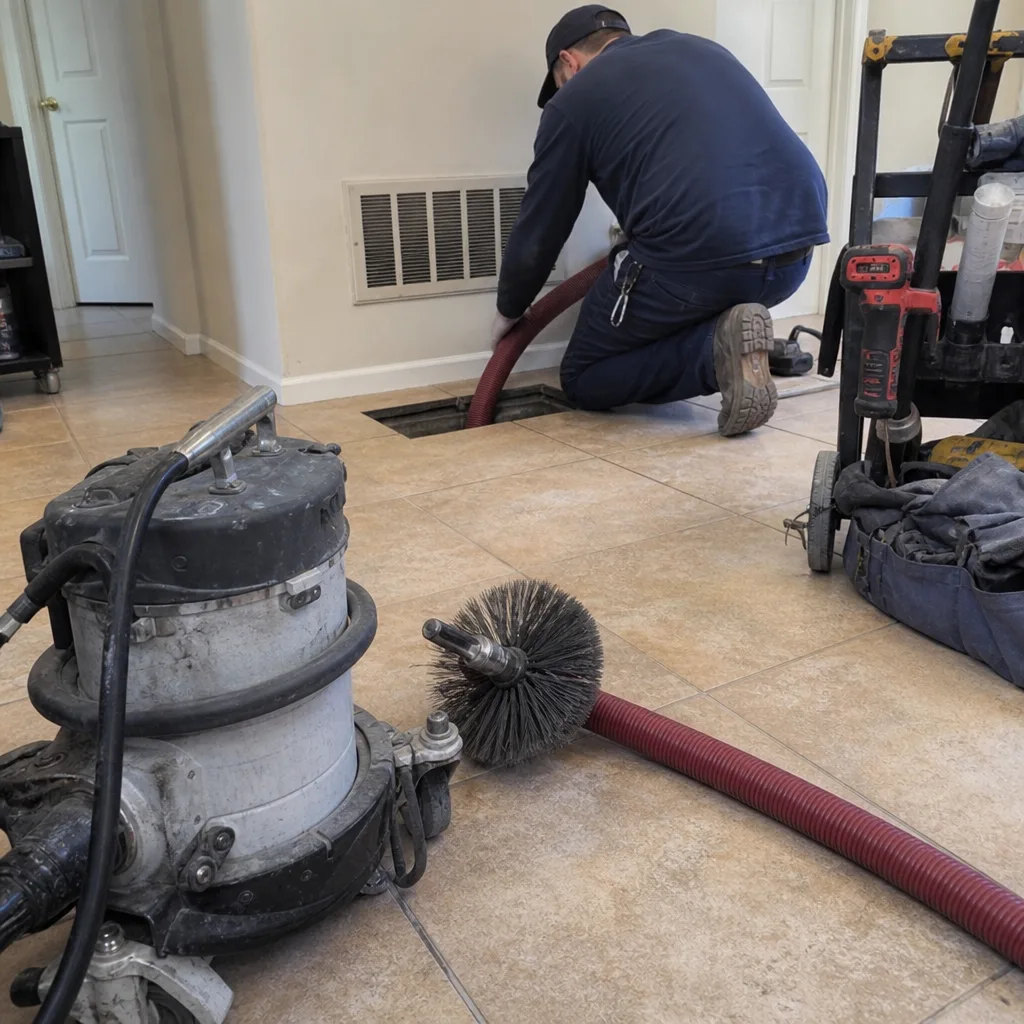 Before
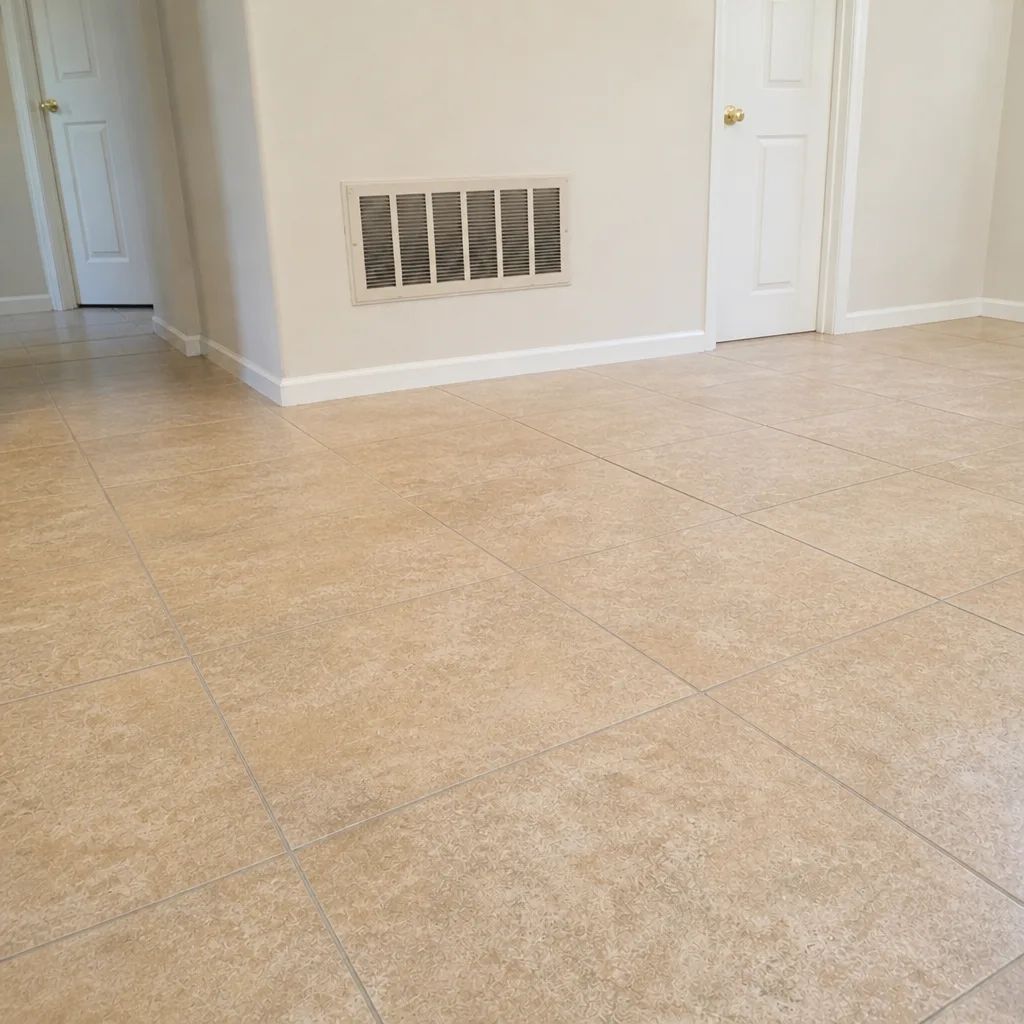 After
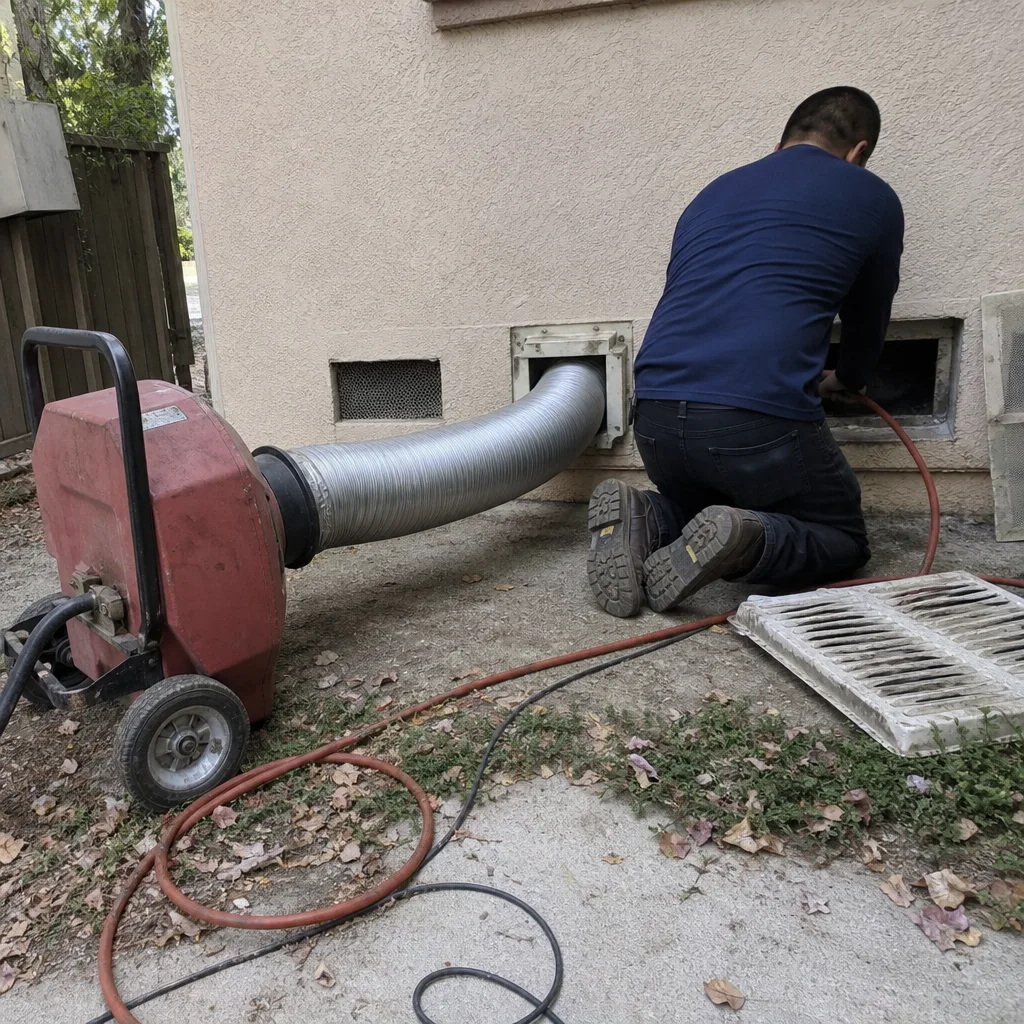 Before
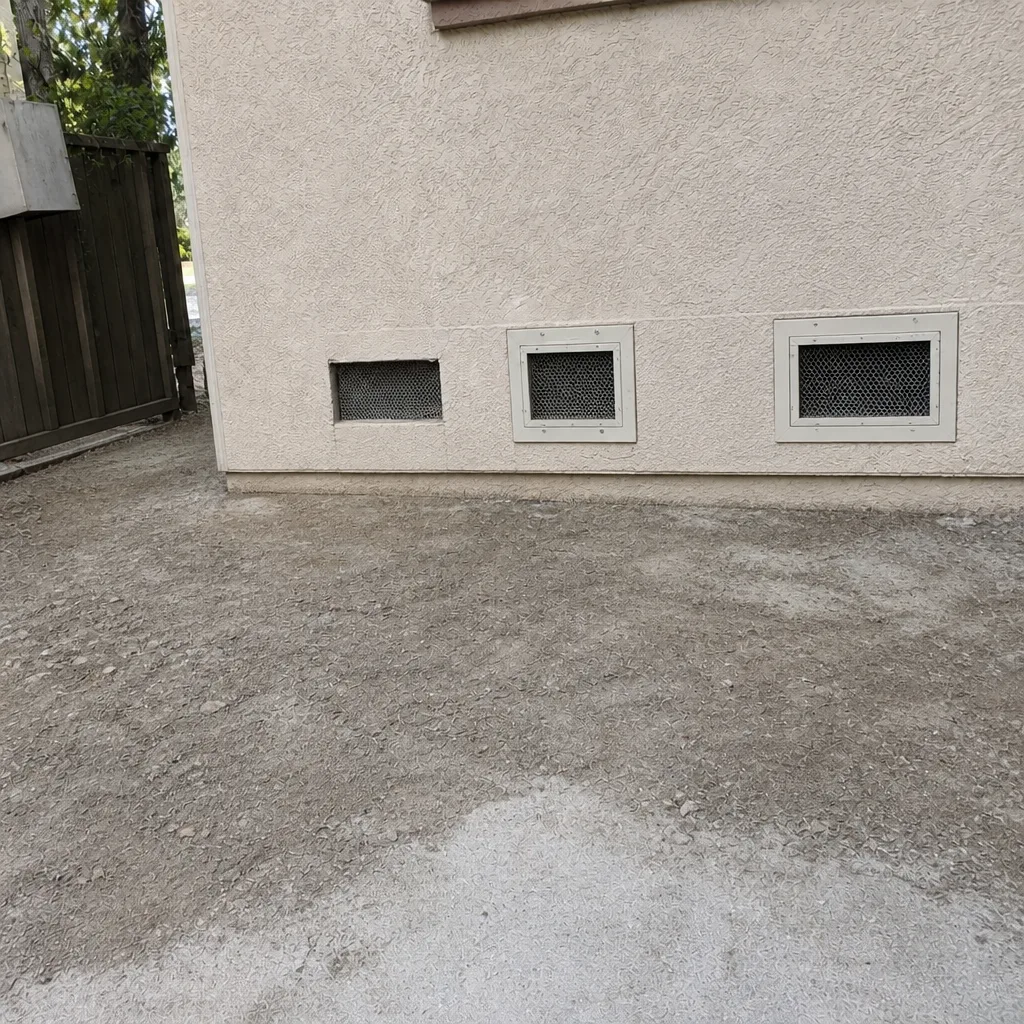 After
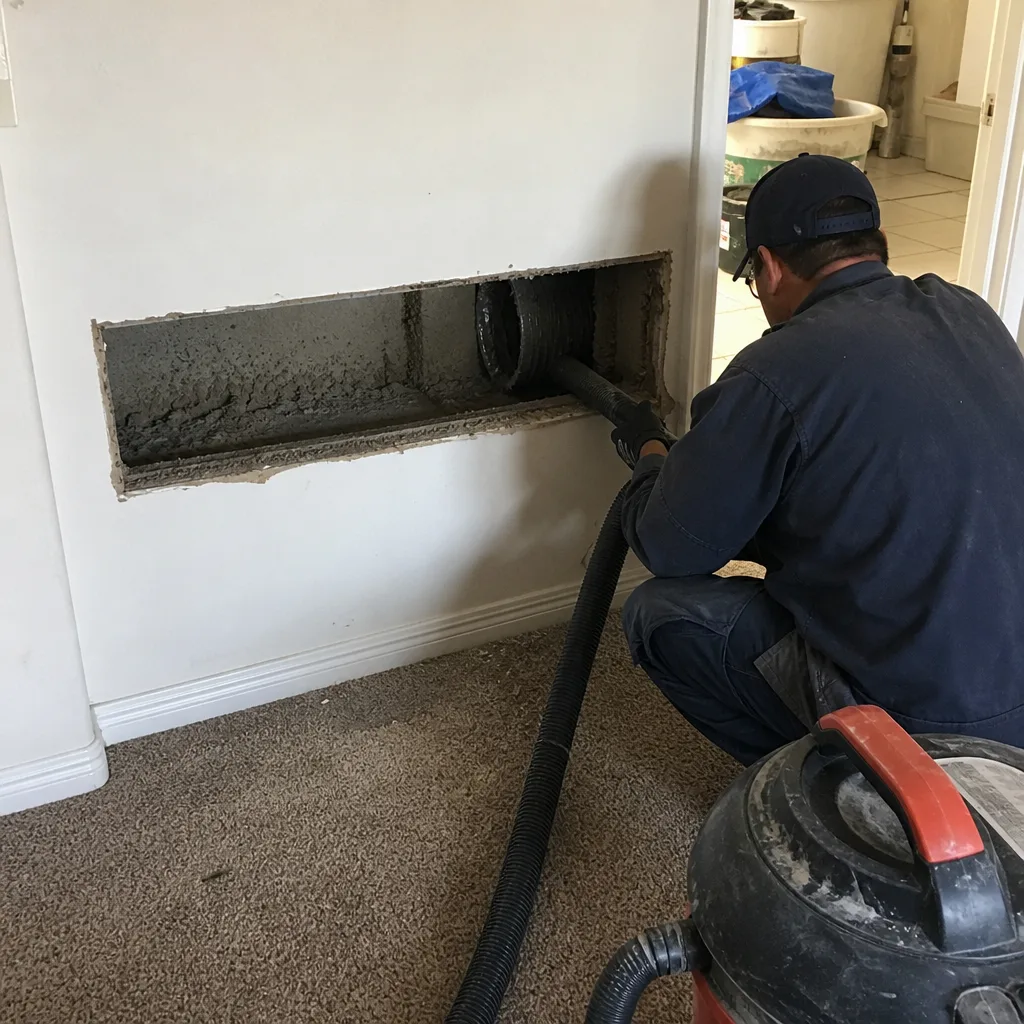 Before
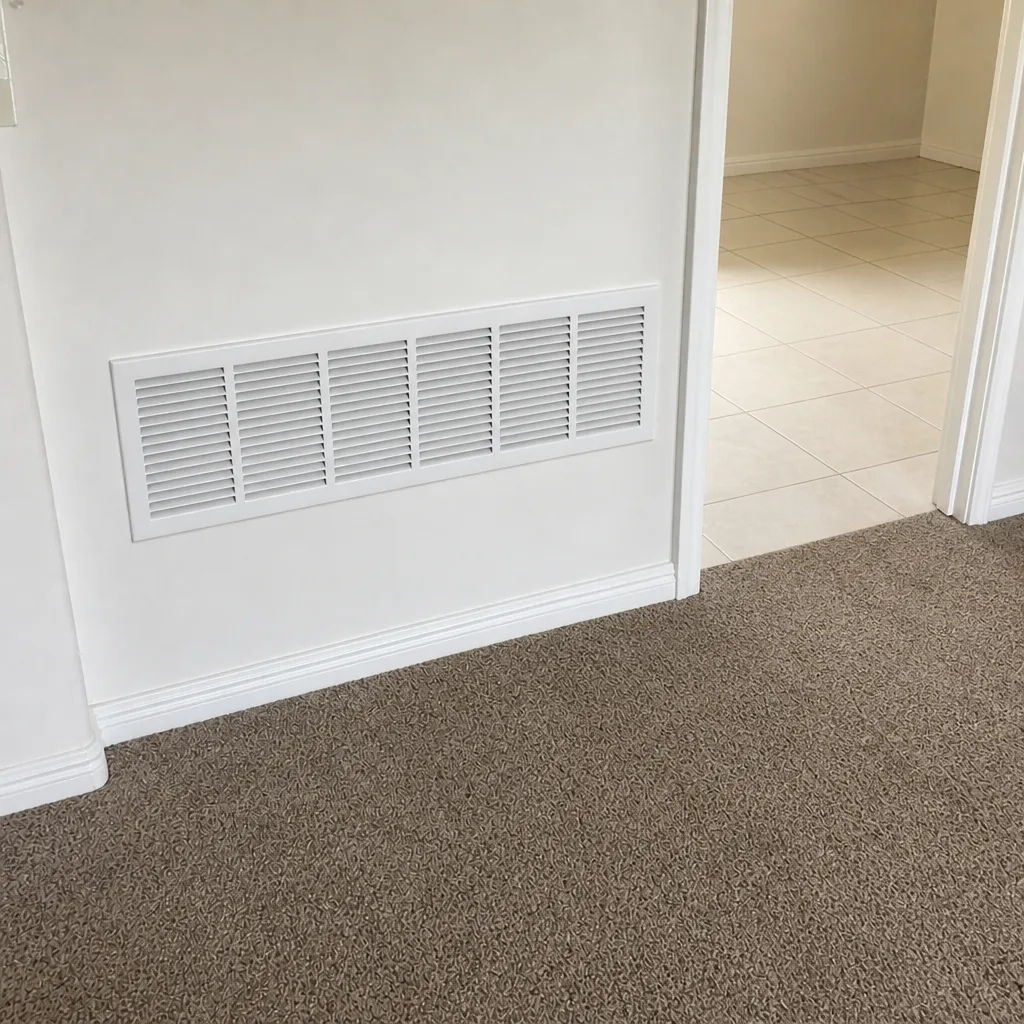 After
When to Call a Professional
Call a professional if you have any of these: visible mold or a persistent musty smell, pest activity in the ductwork, recent renovation debris, a system you can’t confirm has ever been cleaned, long duct runs with a trunk line you can’t reach, or a dryer vent with more than a short, straight run. Those conditions need a high-powered system, rotating brush agitation, and air scrubbers, not a shop vac and an afternoon. Cypress Air Duct Cleaning Co offers free estimates in Cypress. Call (844) 625-7168. We answer 24/7. Fast dispatch from 7am to 7pm, Sunday through Friday. Our technicians have up to 13 years of experience, and we walk through what we found before recommending any work.
Frequently Asked Questions
Partially, and only the surface. A shop vac can reach the register boot and the first foot or two of each branch run, which is around 15% of a full cleaning. The trunk line, plenum, and coil are outside the reach of a homeowner setup, and a standard shop vac will exhaust fine dust back into the room rather than capturing it. Call (844) 625-7168 for a free estimate if you want the whole system addressed.
Pricing is per job and set by a written estimate after the technician inspects your system, so the number depends on the size of the home, accessible duct footage, and how many branches and returns you have. We don’t quote per-vent coupon prices, because that approach tends to grow once the technician is on site. One flat price per system is agreed before work starts, and you get before-and-after photos. Call (844) 625-7168 and we’ll set up a free estimate.
Most homes can go several years between cleanings, and many never need one on a fixed schedule at all. The triggers matter more than the calendar: a remodel, a new pet, a move into a home with unknown history, visible dust returning after cleaning, or a duct system that has never been addressed. If the air in your Cypress home smells off or dust settles back quickly after a cleaning, that’s a signal to get it looked at. Call (844) 625-7168 for a no-cost assessment.
Because a low teaser price usually covers a limited pass, not whole-system cleaning. A fair quote reflects the equipment involved: a professional rotating-brush system, a high-powered vacuum, air scrubbers, and a technician’s time. When a price is dramatically lower than others, ask what’s included, whether the trunk and plenum are covered, and whether you’ll get photos afterward. We’re upfront about what a cleaning involves before we quote. Our technicians have up to 13 years of experience and our estimates are free. Call (844) 625-7168.
Ask for before-and-after photos of your own duct interior, not stock images. A legitimate cleaning leaves visible evidence: dirty before, clean after, dated and documented. Ask to see the air scrubber running during the visit, and ask the technician to walk you through what was found in the coil and blower. If a company can’t show you the inside of your ducts, that’s worth asking about. Call us for an estimate and we’ll walk you through the process: (844) 625-7168.
If the run is short, mostly straight, and terminates at an exterior wall you can reach, DIY dryer vent cleaning is a solid weekend project and worth doing. If the run is longer than about 15 to 20 feet, has multiple elbows, or routes through a crawlspace or roof, a professional cleaning is the safer call. Lint accumulation is a real fire risk, and a jammed brush in a long run can do damage trying to get out. Call (844) 625-7168 if you’d like us to take a look; estimates are free.
The Bottom Line
DIY duct cleaning is worth doing in the specific places it works: register covers, accessible branch runs, and a short dryer vent. It’s not a substitute for whole-system cleaning, and the reason isn’t effort. It’s CFM, negative pressure, and containment, which are equipment problems no amount of elbow grease solves. If your ducts show mold, pest activity, or renovation debris, skip the DIY version entirely. If it’s been years since the system was cleaned, or you don’t know the history, use the five-question framework to make the call. Everything you can do yourself, do it carefully. Everything the system needs beyond that, get a professional to run the brush with the vacuum sealed behind it. That’s how a Cypress home ends up with cleaner air and a cleaner system, not just a cleaner register cover.
Ready to see what’s actually in your ducts? Cypress Air Duct Cleaning Co offers free estimates on every job. Call (844) 625-7168. We answer 24/7. Fast dispatch from 7am to 7pm, Sunday through Friday.
Written by the team at Cypress Air Duct Cleaning Co.