
Last updated November 23, 2026
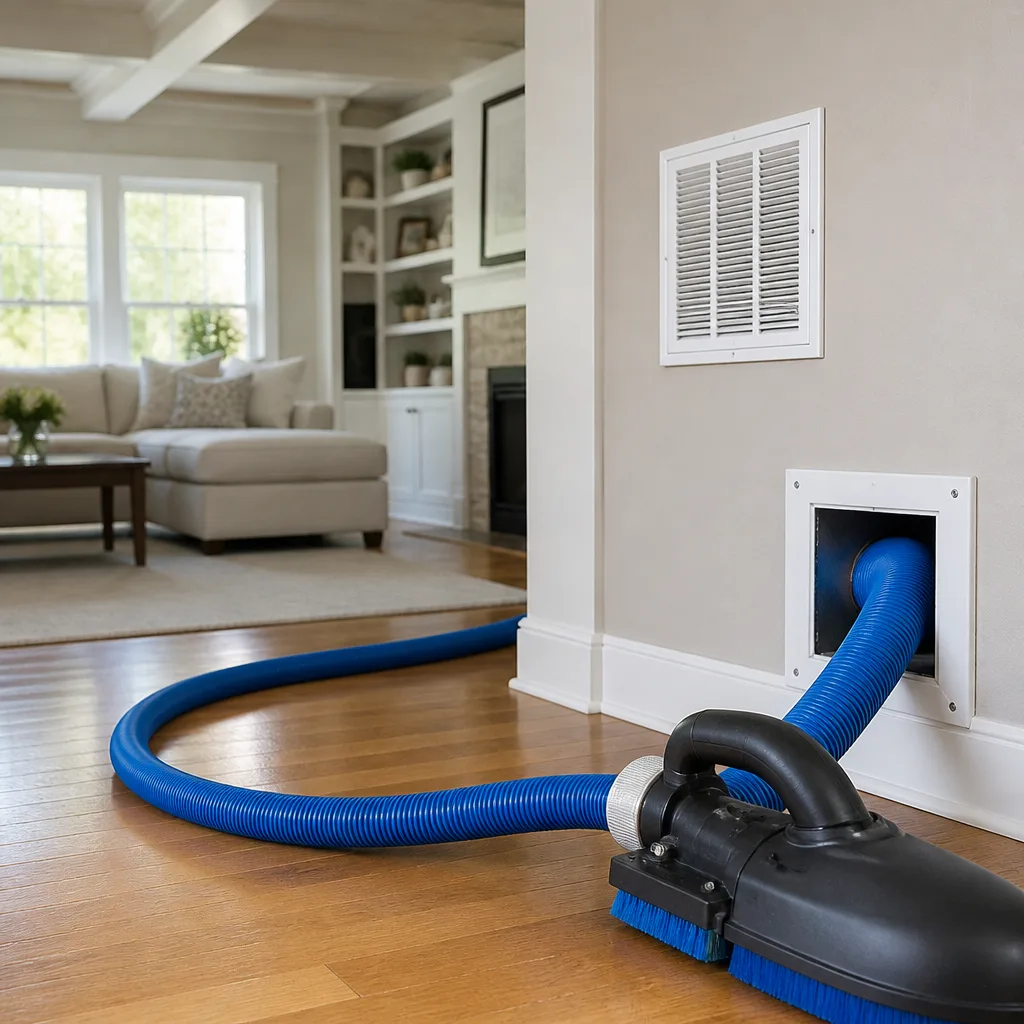 Whole-home duct cleaning
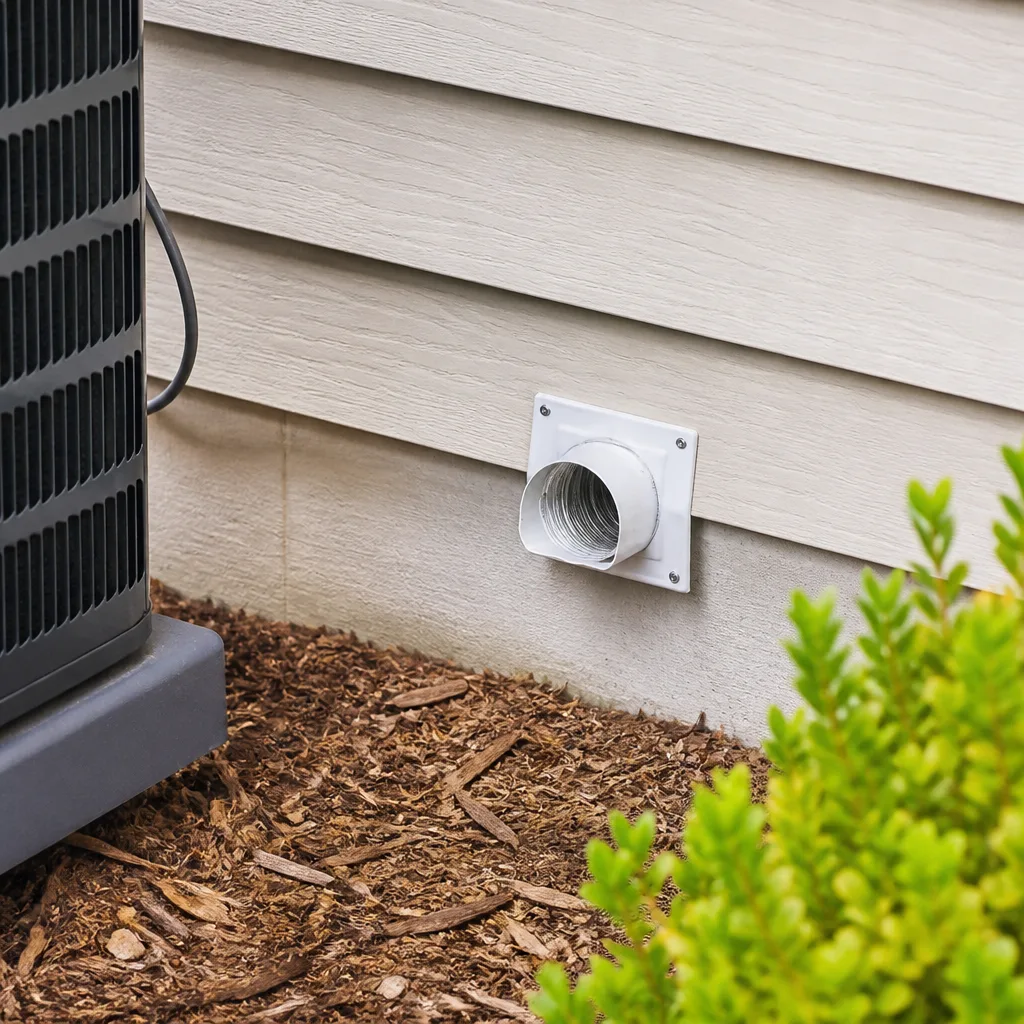 Dryer vent cleaning
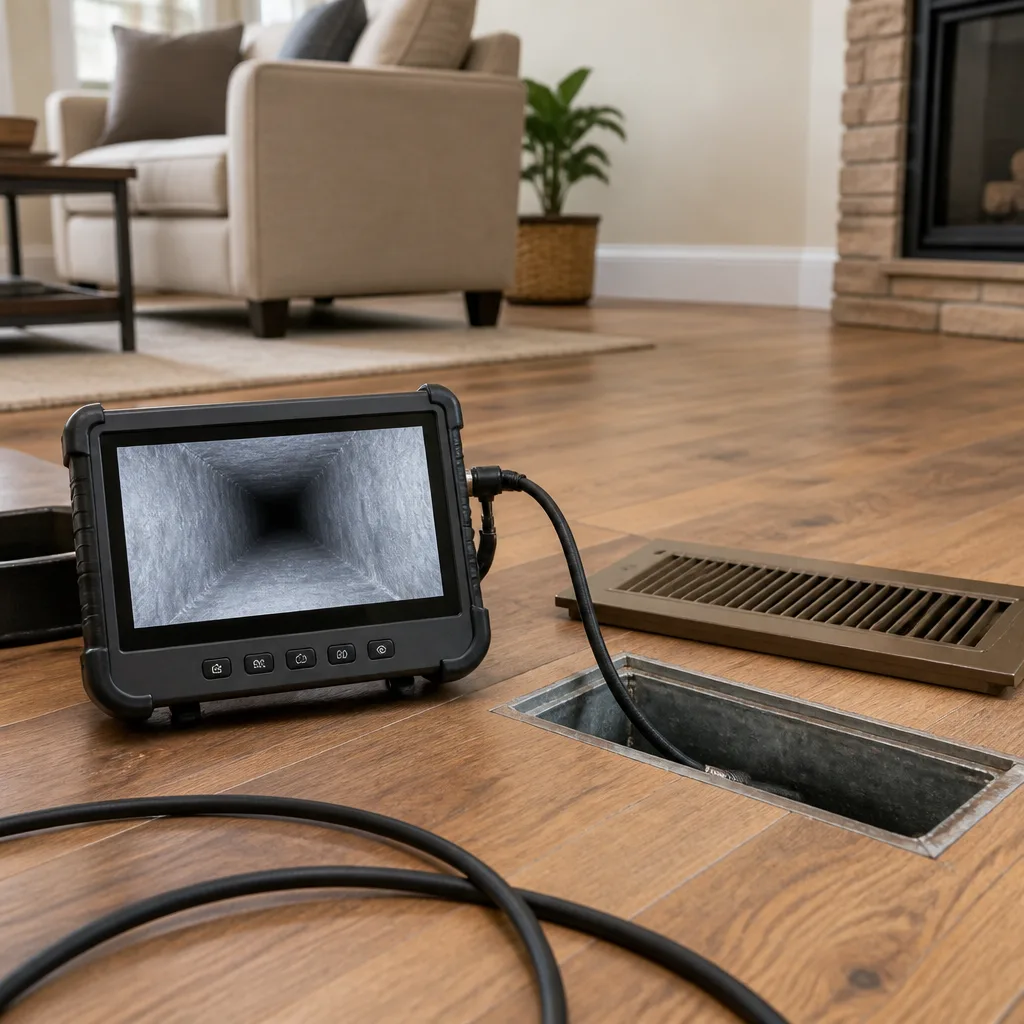 Camera inspection
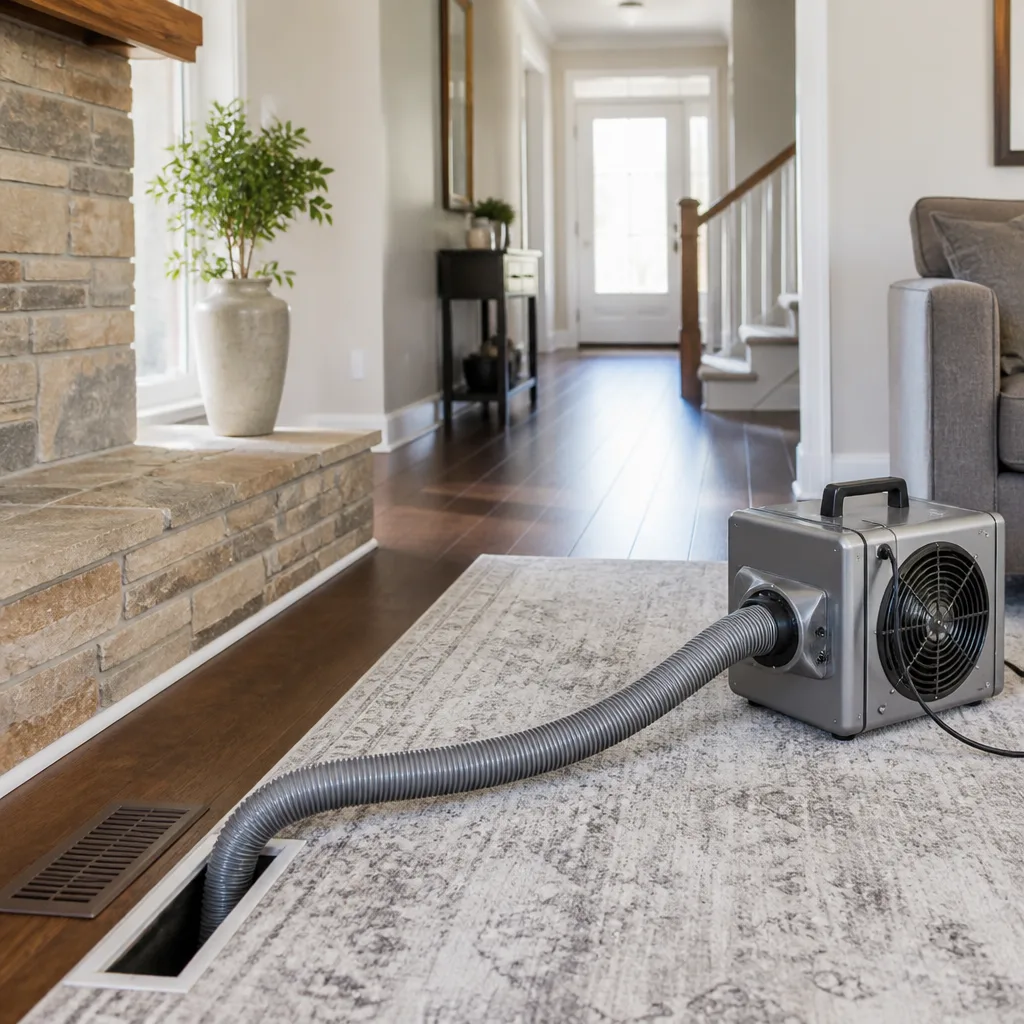 Sanitizing & deodorizing
Whole-system duct and dryer vent check with before-and-after photos - you see exactly what came out of your vents
That "$99 whole-house special" is a bait ad - the real number appears once they are in your hallway, or the "clean" is a shop-vac at the register. We photograph the inside of your ducts before and after instead.
Air Duct Cleaning Maintenance Checklist for Cypress Homeowners
Changing your filter on schedule feels responsible. But a clogged filter pulled after 60 days can tell you more about your duct system’s condition than any calendar reminder ever will. Most homeowners treat duct maintenance as a once-a-decade decision, when it’s really a season-by-season habit of reading the signals your system already gives you. This guide walks through the inspection protocol a technician actually runs, what you can check yourself versus what needs a camera and professional equipment, and how Cypress’s own weather patterns change the timeline. We’ll cover filters, registers, odors, dryer vents, and what to do after a renovation. Everything here is built for Cypress homes specifically.
Quick Answer
A practical air duct maintenance checklist for a Cypress home means inspecting filters every 30 to 60 days, checking registers monthly for dust streaks or airflow changes, scheduling a full professional cleaning every two to five years depending on filter grade and household conditions, and cleaning the dryer vent every year. The marine layer months and the dryer Santa Ana wind periods change what you’ll find, so timing matters. A qualified technician uses a camera inspection to confirm what’s actually inside the ducts before quoting any work.
Styles & brands we work with
- Whole-home duct cleaning
- Dryer vent cleaning
- Camera inspection
- Sanitizing & deodorizing
Table of Contents
- Why a Fix-It-When-It-Breaks Approach Fails in Cypress
- The Filter Grading System: What Your Used Filter Is Telling You
- Month-by-Month Inspection Calendar for Cypress
- What You Can Check Yourself vs. What Needs a Technician’s Camera
- The Dryer Vent: A Parallel Checklist With Its Own Timeline
- Post-Renovation and Post-Pest Checklists
- When Cleaning Is Actually Due (and When It Isn’t)
- Common Mistakes to Avoid
Why a Fix-It-When-It-Breaks Approach Fails in Cypress
Duct contamination rarely announces itself. It accumulates quietly, and by the time you notice dust streaks on a ceiling register or a musty smell when the HVAC kicks on, the problem has usually been building for a year or more. The whole point of a checklist approach is to catch the early signals before they become a system-wide issue.
Cypress has two distinct seasons that drive how fast ducts collect debris. The cooler marine layer months bring higher indoor humidity, which changes how dust and organic particles settle inside ductwork. Those are also the months most households run the HVAC less, which means dust sits undisturbed and gets a chance to clump and stick to duct walls rather than blow through the registers. When the system fires up again, that accumulated layer becomes airborne.
The dry Santa Ana wind periods are the opposite problem. Wind events push fine particulate matter into the outdoor air, and every return duct is pulling that air into the system. Households near open lots, construction sites, or busy corridors near Valley View Street or Lincoln Avenue tend to see faster filter loading during these stretches. We’ve seen systems in Cypress fill a filter in weeks during a bad wind stretch when the same filter would normally last a full season.
None of this is a reason to panic-clean. It’s a reason to inspect on a schedule and let the evidence tell you when cleaning is actually due. That’s the whole discipline this checklist is built around.
The Filter Grading System: What Your Used Filter Is Telling You
The filter is the cheapest diagnostic tool in your house. What it looks like when you pull it tells you something specific about what’s happening inside the duct system downstream. Read it before you throw it out.
Grade 1: Even, light-gray dust
This is a healthy filter showing normal particulate loading. Dust is uniformly distributed, there’s no clumping, and the pleats are still separated. Your ducts are likely in good shape and a professional cleaning isn’t indicated on filter evidence alone.
Grade 2: Patchy dark clumping
Rough patches of darker, crusted dust mean moisture or oil is binding particles together. That’s often a sign of a duct leak pulling attic or wall-space air into the system, or a filter that’s been in place too long past its service window. We recommend having a technician inspect for duct leaks before simply cleaning, because cleaning doesn’t fix a leak and the problem will return.
Grade 3: Visible fibers or insulation strands
Long light strands clinging to the filter are usually fiberglass from degraded duct insulation or duct board. This one is a genuine red flag and means sections of the duct run may be shedding. It calls for a professional inspection with a camera, and potentially the duct repair and sealing capability to fix the source.
Grade 4: Dark staining on the return side only
Discoloration concentrated on one side suggests localized contamination right behind a specific return register. The fix isn’t a whole-house cleaning; it’s inspecting that branch and addressing the source. In Cypress homes where a return register sits low in a hallway near a laundry area, lint and cleaning products can accelerate this pattern.
The point of the grading system is that it moves you from “change filter on the calendar” to “read the filter and act on evidence.” That’s a meaningfully different habit.
Month-by-Month Inspection Calendar for Cypress
This calendar is tied to Cypress’s actual weather patterns rather than a generic national template. Adjust it slightly based on filter grade and household size, but the shape of the sequence holds.
- January – February (cooler, higher indoor humidity): Check filters once. Look at registers near bathrooms and kitchens for signs of condensation or displaced dust. This is a low-load season; if a filter is loading fast now, something else is going on.
- March – April (marine layer settles in): Inspect for musty odor when the HVAC starts up. This is when damp-air smells become noticeable in Cypress. If you smell it, note which rooms it appears in first. That pattern points to the branch of the system that needs inspection.
- May – June (pre-wind season): Fresh filter change before the dry season. Check the outdoor condenser and the connections where supply and return ducts enter the unconditioned space. Look for seams or joints that show dust escaping.
- July – August (dry, hot, high system run time): Inspect filters twice. The system runs heavily and any weak link shows up now. Look for uneven airflow across rooms. If one bedroom is always warmer than the rest, that’s a duct performance issue, not a thermostat issue.
- September – October (Santa Ana wind periods): This is your heaviest filter-loading window. Inspect filters every two to three weeks until winds settle. Check registers for fine dust lines around edges. Have the system inspected if you see dust trails.
- November – December (transition to cooler season): Full visual inspection of every accessible register. Check the dryer vent (see that section below). Schedule a professional inspection if you haven’t had one in the last two to five years, or if any earlier month flagged a specific concern.
The single best habit in this calendar is the pre-wind and post-wind check in September and October. Those two months tell you more about your duct system’s actual condition than all the others combined.
What You Can Check Yourself vs. What Needs a Technician’s Camera
Homeowners can catch a surprising amount without any tools. What they can’t see is the inside of the duct run, and that’s where a lot of the real information lives.
What you can safely inspect yourself
- Register discoloration: Look at every ceiling and wall register. Dark streaks radiating from the edges mean air is escaping before it leaves the register, pulling dust with it. Consistent streaks across multiple registers mean a systemic issue.
- Airflow balance: On a mild day, hold your hand (or a tissue) at each register. The flow should feel similar across rooms on the same branch. Noticeable weak spots point to a leak, a blockage, or a collapsed section.
- Odor after HVAC startup: Turn the system on after it’s been off for hours. A musty smell that lasts more than a minute or two is a signal. A dry, dusty smell that clears in seconds is normal.
- Visible dust plumes: Turn the system on in a dim room with the register pointed at light. A light haze is normal on initial startup. Anything that persists past 30 seconds means dust is being lifted from somewhere it shouldn’t be.
- Filter condition: Use the grading system above.
What requires a camera and professional equipment
Camera inspection is what separates a real diagnosis from a guess. A technician threads a camera down supply and return runs to see the actual interior condition of the ducts. That’s the only way to confirm whether what’s in the filter came from inside the ducts versus a leaky boot, an improperly sealed joint, or a disconnected section hidden behind drywall. It’s also the only way to tell true accumulated buildup from staining.
The professional-grade equipment matters here. Rotobrush and Nikro systems combine a rotating brush with high-powered vacuum to physically remove accumulated material from duct walls rather than just loosening surface dust. A consumer shop vac cannot duplicate this. When a technician can pair a camera inspection with real cleaning and duct repair and sealing capability in one visit, the process is complete rather than partial.
For a deeper look at what full-system cleaning involves, see air duct cleaning.
The Dryer Vent: A Parallel Checklist With Its Own Timeline
Dryer vents follow a different accumulation curve than HVAC ducts, and they get ignored more often. Lint accumulates faster, it packs tighter, and the consequence of a clogged vent is more serious than most homeowners realize.
The lint timeline, generally
- 0 – 6 months: Light surface lint on the vent flaps and near the dryer connection. Routine.
- 6 – 12 months: Noticeable lint mat beginning to form. Dryer may need an extra cycle to finish a load. This is when professional cleaning should be scheduled for most households.
- 12 – 18 months: Visible compaction. Dryer exhaust feels weak. Clothes come out hotter than they should or take two cycles for a normal load. Cleaning is overdue.
- 18+ months in heavy-use homes: Significant restriction. The dryer runs longer, the vent exterior flap barely moves, and lint may be visible at the exterior termination point.
Household size, load frequency, and dryer model all shift the timeline. A Cypress household running multiple loads a day sits at the aggressive end. A household running two loads a week sits at the relaxed end. The important discipline is inspecting, not assuming.
What to inspect yourself
- Check the exterior vent flap once a month. It should swing freely when the dryer runs. Resistance or blockage is a signal.
- Disconnect the flexible duct behind the dryer (with the dryer unplugged) and look inside the first section for buildup. Light lint is normal.
- Feel the exterior vent while the dryer is running. Weak or no flow means restriction between the dryer and the exterior.
- Note drying time. If a normal load starts requiring a second cycle, the vent is the first suspect.
A clogged dryer vent is one of the most avoidable household hazards, and it’s part of the same whole-system maintenance picture. You can read more about the process in dryer vent cleaning.
Post-Renovation and Post-Pest Checklists
Renovation and pest intrusions reset the maintenance clock. These aren’t routine scenarios and they follow their own timeline.
Post-renovation timeline
- Day of demolition starts: Cover or seal every register in the work area. Drywall dust, sawdust, and insulation fibers get pulled into the return system fast, and once inside they distribute through the whole house.
- Day of substantial drywall work: If the system must run during work, add a temporary high-efficiency filter at the air handler and check it every few days. Otherwise keep the system off during active sanding.
- Week of renovation wrap-up: Replace the filter (expect heavy loading). Inspect registers in the work area. Visible dust trails around register edges mean the system pulled construction dust into the duct run.
- 2 – 4 weeks after wrap-up: This is the window when a full professional cleaning should be scheduled if any construction dust made it into the system. Cleaning before this window means re-contaminating. Cleaning after too long means the dust has bonded to duct walls and is harder to remove.
- 3 months after wrap-up: Re-inspect the filter. If it’s still loading abnormally, the system likely has residual debris and needs camera inspection.
Post-pest timeline
Rodents, birds, and insects entering ductwork is more common than homeowners expect, especially in Cypress homes with accessible attic duct runs. Droppings, nesting material, and carcasses can end up in return branches, and the odor and contamination follow immediately. Pest intrusion is a scenario that calls for professional cleaning followed by sanitizing, generally within one to two weeks of confirming the intrusion. It is not a scenario for a homeowner with a vacuum and good intentions. Cleaning needs to remove the material, and the sanitizing pass with products such as Guardsman is what addresses the biological concern afterward. See the section below for when that’s the right call.
When Cleaning Is Actually Due (and When It Isn’t)
Duct cleaning gets oversold and undersold in equal measure. Here’s how we think about the actual triggers, based on what we look for during a professional inspection.
Signals that cleaning is genuinely due
- Visible dust or debris inside the duct run (technician camera confirms)
- Persistent odor when the HVAC starts up, especially musty or rodent-like
- Confirming a rodent or insect intrusion into the ductwork
- Recent major renovation that generated construction dust in the work area
- Filter loading faster than a normal cycle for the house, with the correct filter grade in place
- Family members with allergies or asthma whose symptoms track with HVAC runtime
- Two to three years since the last professional cleaning in a typical Cypress household
Signals that cleaning is not yet due
- Light dust on registers with no odor or airflow change
- Filter grade 1 condition
- Recent cleaning in a household with no recent trigger event
- A salesperson who showed you “evidence” from a single register without a camera inspection of the full system
Air quality and sanitizing work sits alongside cleaning as a separate service. Sanitizing addresses biological contamination after cleaning has removed the physical material. Professional air-scrubbing equipment such as Abatement Technologies systems brings containment-grade air quality control into the process, which matters most after pest intrusion or heavy renovation dust. Honeywell and Aprilaire filtration products can be added as a system upgrade afterward, but only after the ducts are clean enough for a higher-grade filter to be useful rather than prematurely clogged.
The HVAC cleaning side of the system matters too. The air handler, blower, and coil all contaminate on their own timeline. Cleaning ducts without cleaning the components that push the air leaves half the job done.
Common Mistakes to Avoid
- Relying on the calendar instead of inspection. A two-year reminder means nothing if a household runs a heavy filter cycle. Read your filter and registers before deciding it’s time.
- Assuming a cheap quote is a good quote. If a quote comes in far below others with no camera inspection and no discussion of what’s actually in your ducts, ask what equipment they’re using. Rotobrush and Nikro systems are professional equipment with real operating costs; a bargain quote usually reflects a shop vac and a surface wipe.
- Skipping the dryer vent because the HVAC ducts are on schedule. The dryer vent is on its own timeline and needs its own attention. It’s not an add-on; it’s a separate system.
- Running the HVAC during active renovation without protection. Running the system during drywall work pulls construction dust straight into every supply branch. Seal registers and use a temporary high-efficiency filter, or shut the system down during heavy sanding.
- Cleaning without inspecting for leaks. Cleaning a leaking system means the contamination returns fast. Find the leak, fix the leak, seal it, then clean. Cypress homes with accessible attic duct runs benefit most here because leaks are common at joints and boots.
- Upgrading to a high-MERV filter without addressing duct condition first. A high-MERV filter in a contaminated duct system clogs in days and starves the system for airflow. Clean first, then upgrade.
- Trusting a “sanitizing” pass that didn’t follow cleaning. Sanitizing over contamination doesn’t fix the contamination. Cleaning removes the material; sanitizing treats what’s left.
See the difference
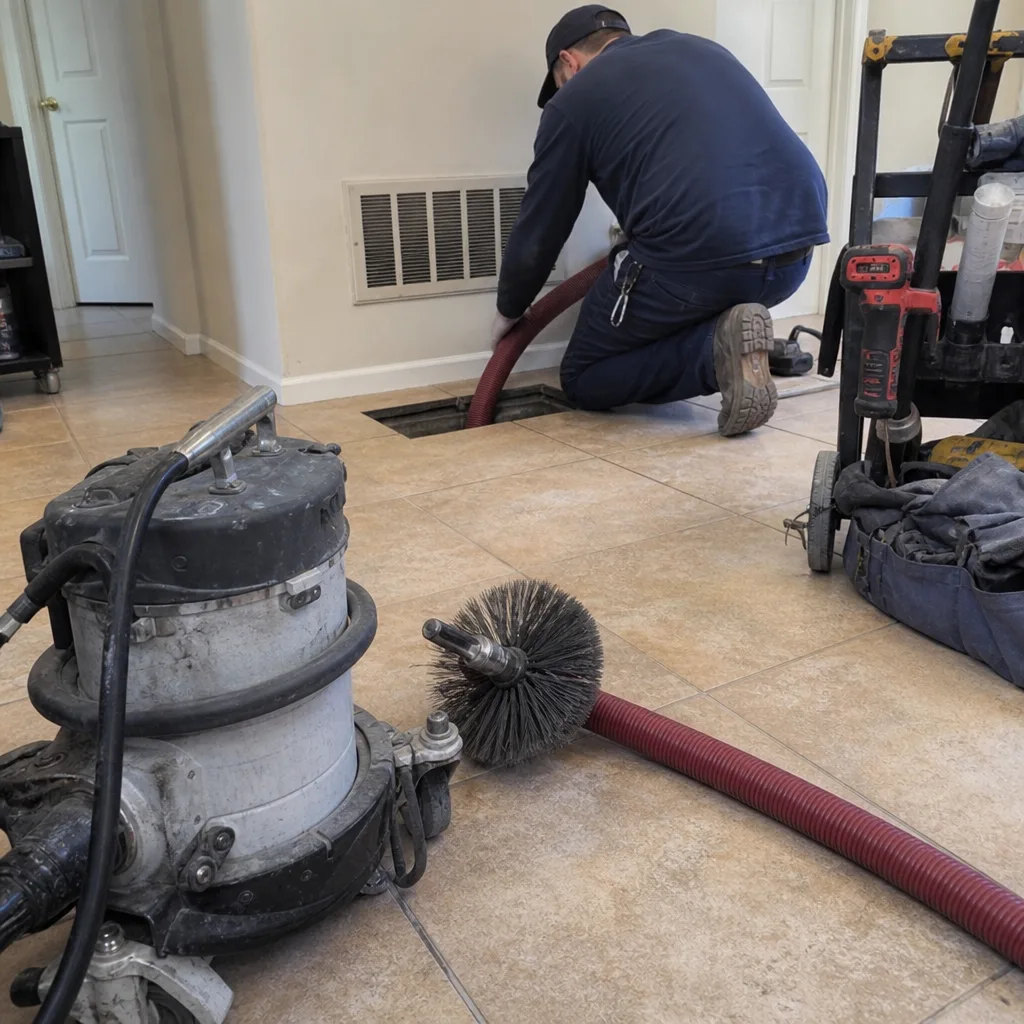 Before
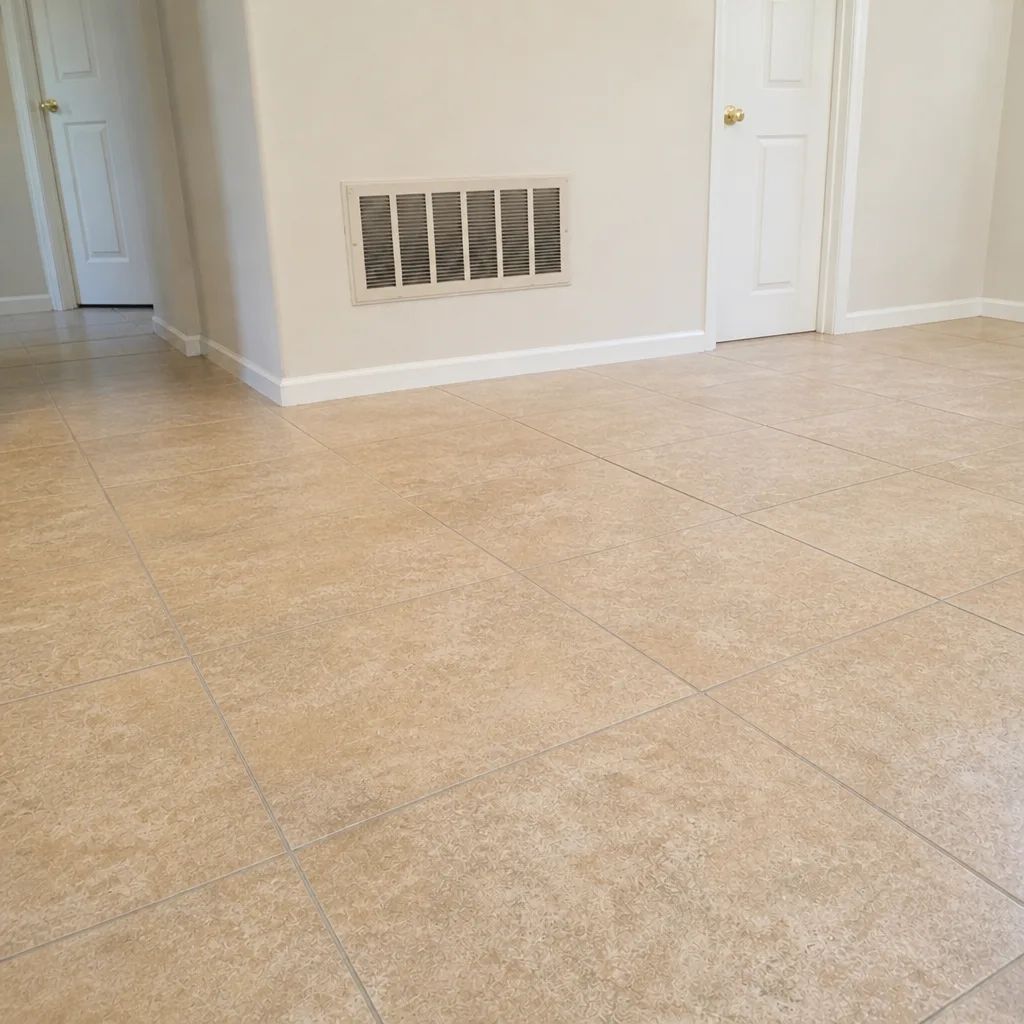 After
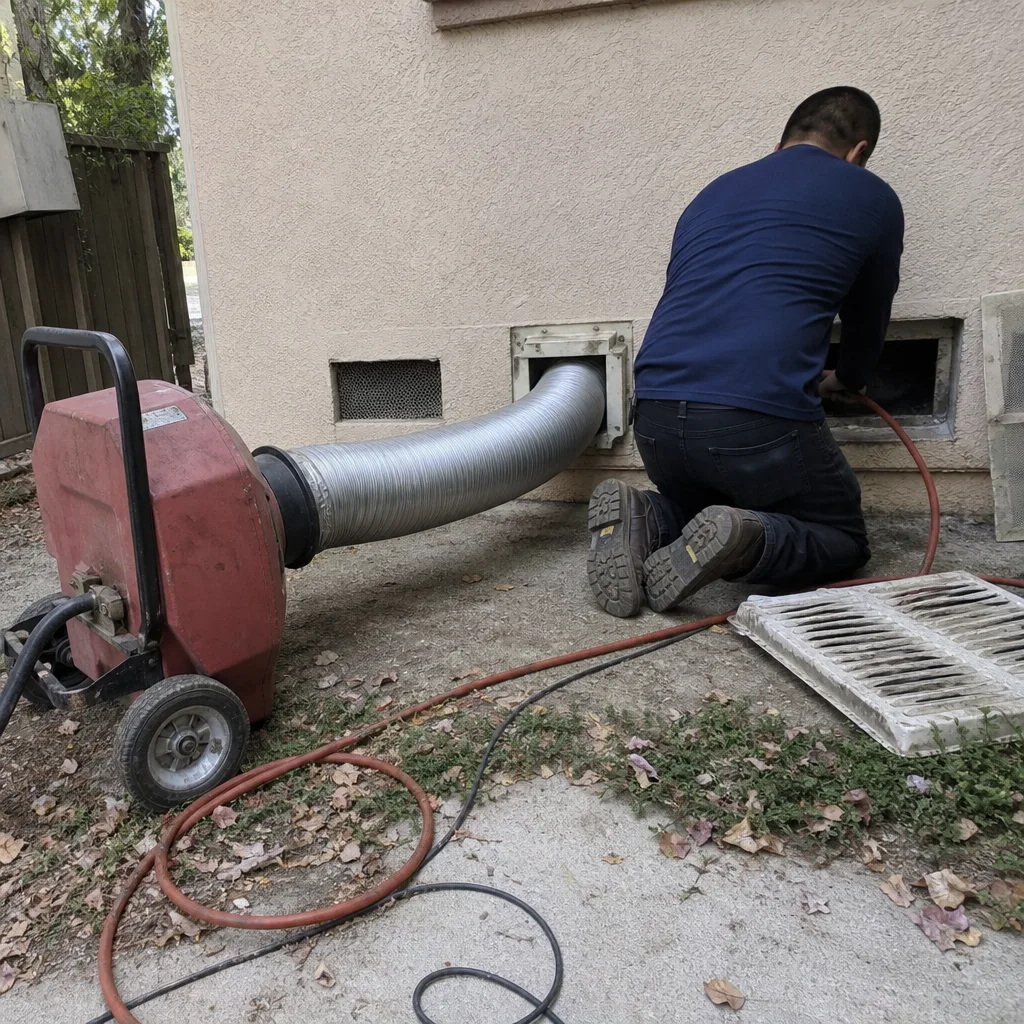 Before
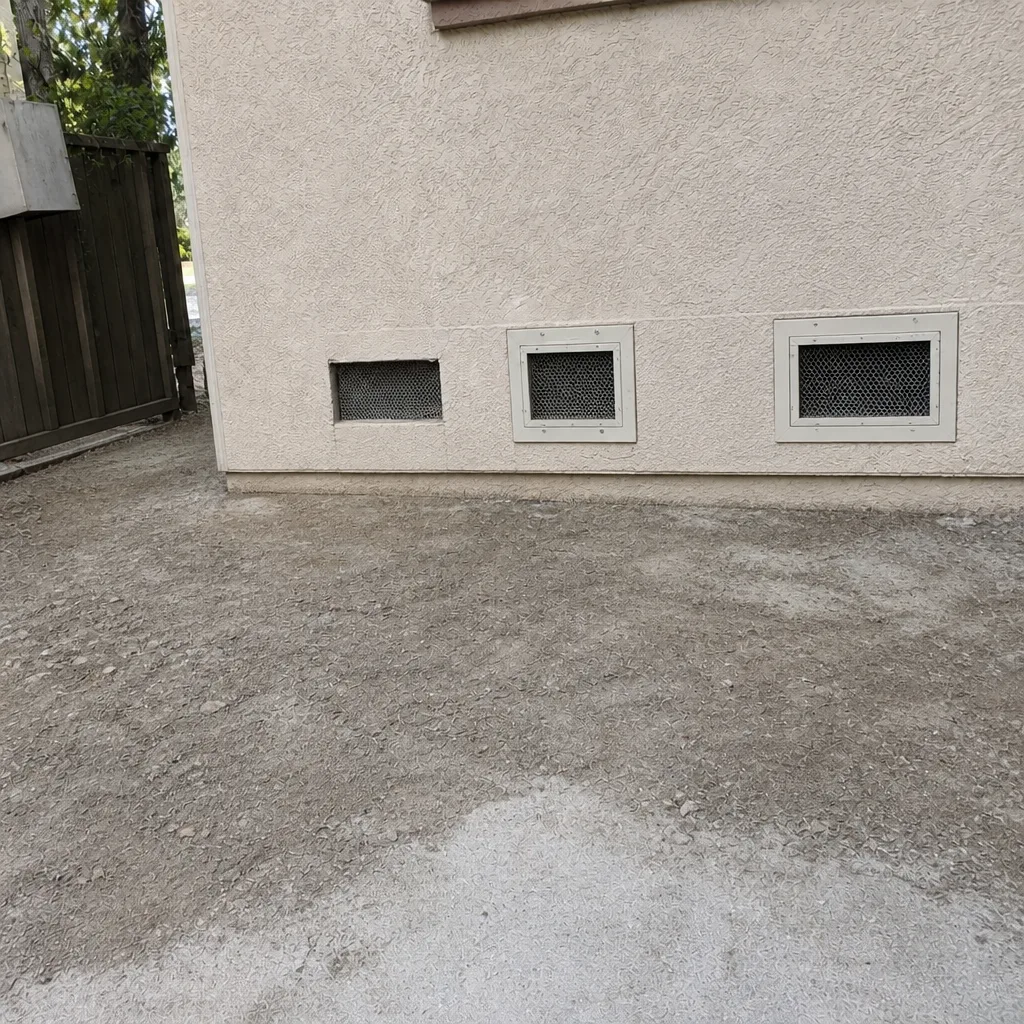 After
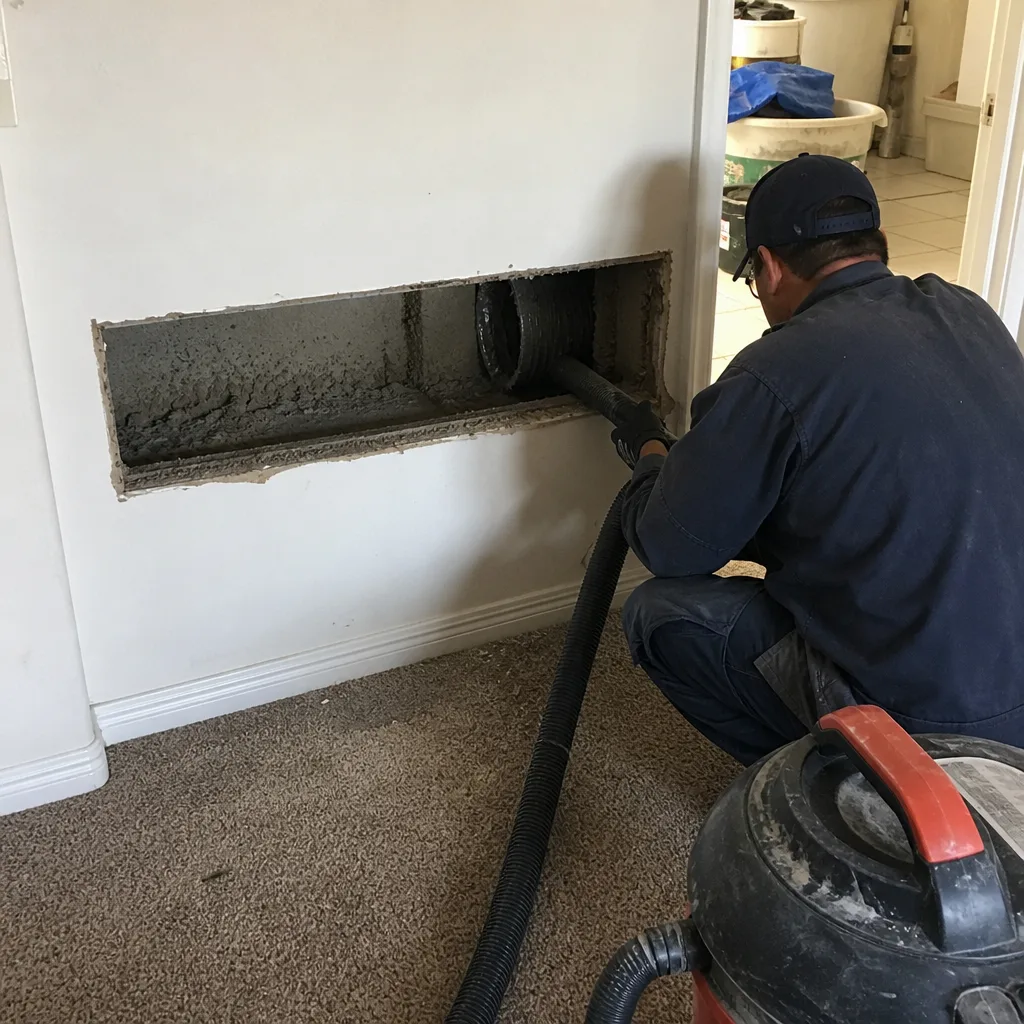 Before
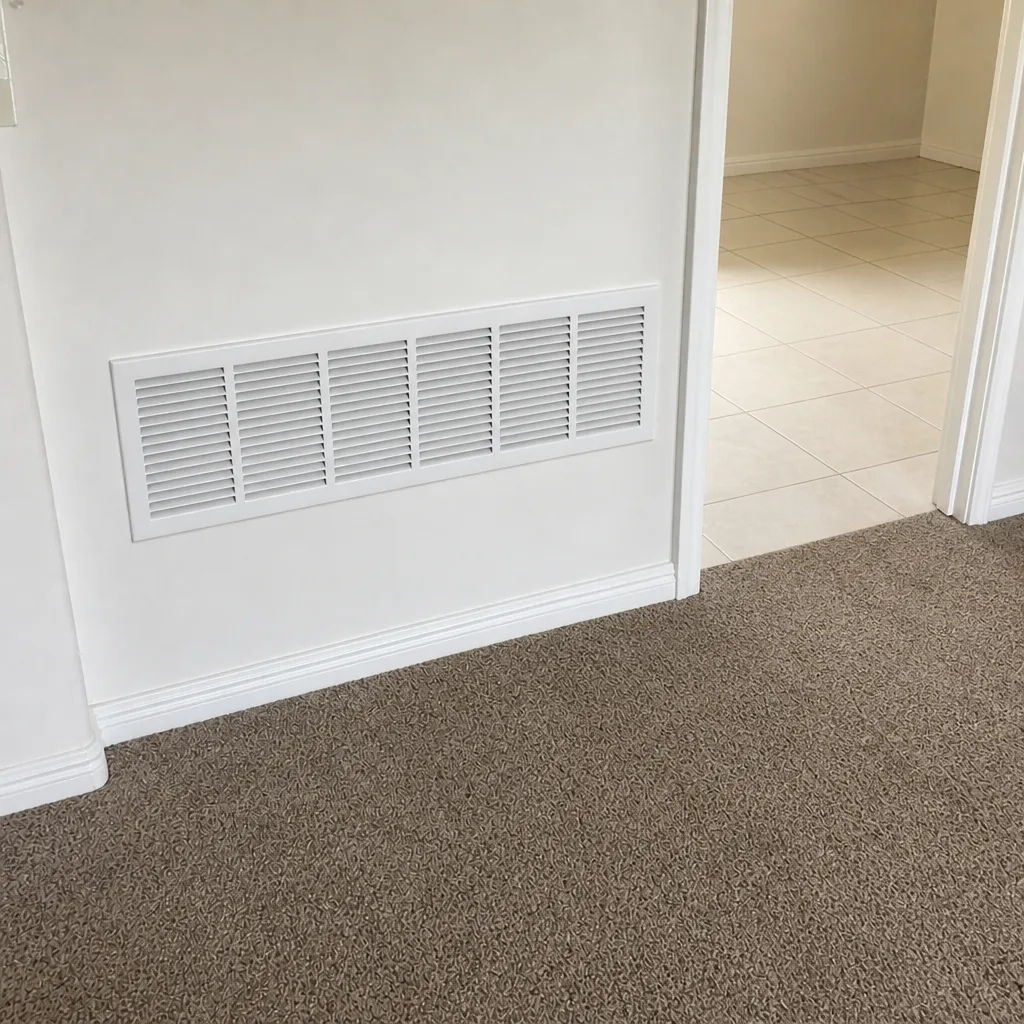 After
When to Call a Professional
Call for a professional inspection when you see any of the following: fibers or insulation strands on the filter, persistent odor when the HVAC starts, visible dust plumes that last more than a few seconds, a renovation that generated construction dust in a work area, confirmed rodent or insect intrusion into ductwork, or it’s been more than two to three years since the last professional cleaning in a household with normal use. Also call if a dryer vent has gone more than a year without inspection in a household running multiple loads per day. A camera inspection tells you what’s actually inside, which is the only honest starting point for any estimate.
Cypress Air Duct Cleaning Co offers free estimates in Cypress. Call (844) 625-7168. We answer 24/7. Fast dispatch from 7am to 7pm, Sunday through Friday. The crew uses Rotobrush and Nikro systems on every job, and Duct Repair & Sealing is handled in-house when camera inspection finds a leak. We work with Cypress Air Duct Cleaning Co on the full five-service scope for residential and light-commercial customers.
Frequently Asked Questions
Every two to three years for most Cypress households, and every one to two years if allergy concerns, pets, or heavy dust exposure are in play. The honest answer is that inspection timing depends on filter loading, register appearance, and any trigger events like renovation or pest intrusion. A camera inspection is the only reliable way to confirm. Call (844) 625-7168 to schedule a free estimate and we’ll look with a camera before recommending anything.
It tells you a lot, if you read it correctly. Uniform light-gray dust means normal loading. Dark clumped patches mean moisture or oil binding particles together, which often points to a duct leak. Long light fibers usually mean degraded insulation somewhere in the run. Dark staining on one side of the filter points to a localized contamination pattern behind a specific return register. Filters can suggest problems, not confirm them – that’s what camera inspection does.
You can inspect registers, filter condition, airflow, and odor – all of which are genuinely useful signals. What you can’t do is see inside the duct runs. Camera inspection threads a lens down the supply and return branches and shows the actual interior condition. That’s the piece homeowners cannot duplicate, and it’s the piece that should drive any cleaning or repair decision.
Annually for most households, and every six to twelve months if the dryer runs multiple loads per day. Signs you’re overdue include clothes taking two cycles, the exterior vent flap barely opening, and lint visibly packed at termination points. The dryer vent is a separate maintenance item from the HVAC ducts and it follows its own timeline. Inspect the exterior flap monthly as a baseline check.
Two to four weeks after substantial construction dust has settled. Cleaning too early means re-contaminating before the last dust falls. Cleaning too late means the dust has bonded to duct walls and becomes harder to remove without heavier mechanical work. If construction dust was heavy, pair cleaning with a sanitizing pass afterward using air-scrubbing equipment, and inspect the filter again about three months post-renovation.
If camera inspection finds leaks, yes. Cleaning without sealing means contamination returns quickly, because every leak pulls in outside air from wall cavities or attic spaces. Duct Repair & Sealing is part of the five-service scope we handle in-house, so when inspection finds a leak, we can find it, fix it, and seal it in the same visit. Cypress homes with attic-routed ductwork are common candidates for this. Call (844) 625-7168 for a free estimate.
The Bottom Line
A duct maintenance checklist isn’t about scheduling the next cleaning. It’s about reading the signals your system already gives you – filter condition, register appearance, airflow, odor – and letting those signals drive decisions. Build the month-by-month inspection habit, learn the filter grading system, treat the dryer vent as its own system, and reset the clock after renovation or pest intrusion. Cypress’s marine layer months and dry wind periods change what you’ll find, so the timing genuinely matters. When evidence points to a real problem, get a camera inspection before agreeing to any cleaning or repair. Call (844) 625-7168 for a free estimate in Cypress. We answer 24/7. Fast dispatch from 7am to 7pm, Sunday through Friday. Our technicians have up to 13 years of experience with professional Rotobrush, Nikro, and Abatement Technologies equipment, and the whole airflow path is on the checklist, not just the visible registers.
Written by the team at Cypress Air Duct Cleaning Co.