
Air Duct Cleaning: Repair or Replace? How Cypress Homeowners Decide
Most Cypress homeowners assume the answer comes down to how old the ductwork is. It usually doesn’t. The real decision is whether your existing ducts can survive a proper cleaning and still deliver clean air afterward. Cleaning deteriorated flex duct in a Cypress attic can dislodge insulation fragments and collapsed liner sections that then circulate through the house, which means a cleaning done on the wrong ductwork makes indoor air quality worse, not better. If you’d rather not sort through that yourself, call (844) 625-7168 and we’ll take a look.
Why “How Old Are My Ducts?” Is the Wrong Question in Cypress
Age tells you almost nothing about whether your ductwork is a good candidate for cleaning. We’ve inspected ducts that were two decades old and still solid, and ducts only a few years old with liner peeling away from the walls. What matters is physical condition, and condition varies wildly from one Cypress house to the next.
The question that actually drives the decision is this: if we run a rotating brush and high-powered vacuum through this system, will it come out cleaner, or will it come apart? That’s not a scare tactic. It’s the practical reality of what professional equipment does inside ductwork that’s already failing.
A few things determine the answer:
- Whether the internal liner is still bonded to the duct wall or flaking off in sheets
- Whether the joints and seams still hold together under vacuum pressure
- Whether the insulation wrap is attached and intact or sagging and torn
- Whether any sections have collapsed, crushed, or disconnected entirely
None of that shows up on a home inspection report. It shows up on camera.
The Three Conditions That Make Cleaning Worthwhile (or Futile)
Before we clean anything in a Cypress home, we want to know three things about the ductwork. Each one is visible on a camera inspection, and each one changes the recommendation.
1. Duct liner integrity
Flex duct and lined metal duct both carry an inner layer that keeps air flowing smoothly and keeps insulation fibers out of the airstream. When that liner stays bonded, cleaning is straightforward. When it’s peeling, cracked, or separating, a brush can tear it further and send fragments downstream into your registers. A camera run down a few representative runs tells us which situation we’re in before any equipment comes off the truck.
2. Joint sealing condition
Every joint is a potential leak, and every leak pulls attic air into the system. In a Cypress attic, that air is hot and full of loose insulation dust. Ducts with failing joints often aren’t worth cleaning until they’re sealed, because you’d be cleaning a system that immediately re-contaminates itself. Our Cypress Air Duct Cleaning Co team can find a leak, fix it, and seal it in the same visit, which is the part pure-cleaning companies can’t help with.
3. Insulation attachment
When the outer insulation wrap separates from the duct, the duct sweats, sags, and eventually collapses. Sagging runs collect dust and restrict airflow. If the insulation is already falling off, cleaning won’t fix the air quality problem because the duct itself is failing. This is the condition that most often turns a cleaning visit into a repair conversation.
Cypress Attics Are Hard on Ductwork
Ductwork in a Cypress attic lives a harder life than ductwork in a conditioned crawlspace or an interior chase. Summer attic temperatures here frequently climb above 140°F. That heat does two things to flex duct over time: it breaks down the adhesives holding the liner and insulation in place, and it makes the plastic materials more brittle.
The result is ductwork that ages faster in Cypress than it would in a milder climate or an installation protected from extreme heat. A flex run that would last a very long time in a conditioned space may start showing liner separation and insulation sag much sooner when it’s baking in an attic every summer.
That’s why we don’t treat “the ductwork looks fine from the register” as good enough. The runs in the attic are where the problems hide, and they’re exactly the runs a camera inspection is built to check.
How a Camera Inspection Changes the Math
Skipping the inspection is how homeowners end up paying for a cleaning that can’t be completed properly. Here’s the scenario we want to prevent: a crew arrives, starts brushing a trunk line, hits a collapsed section, and either stops or pushes through and damages the duct further. Either way, you’ve paid for a service that didn’t deliver clean air.
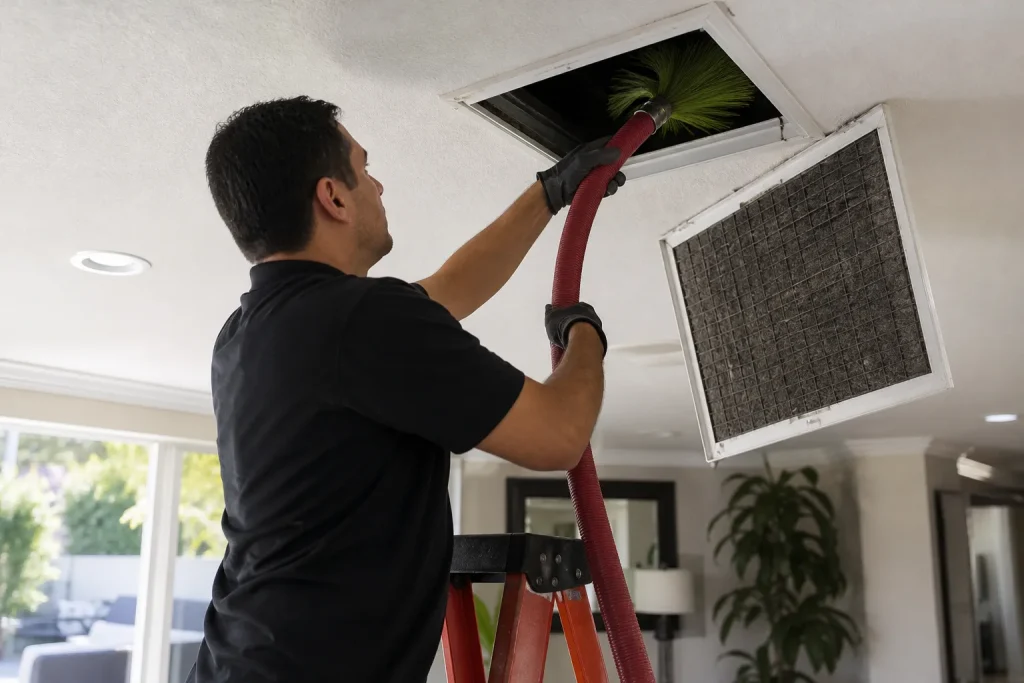
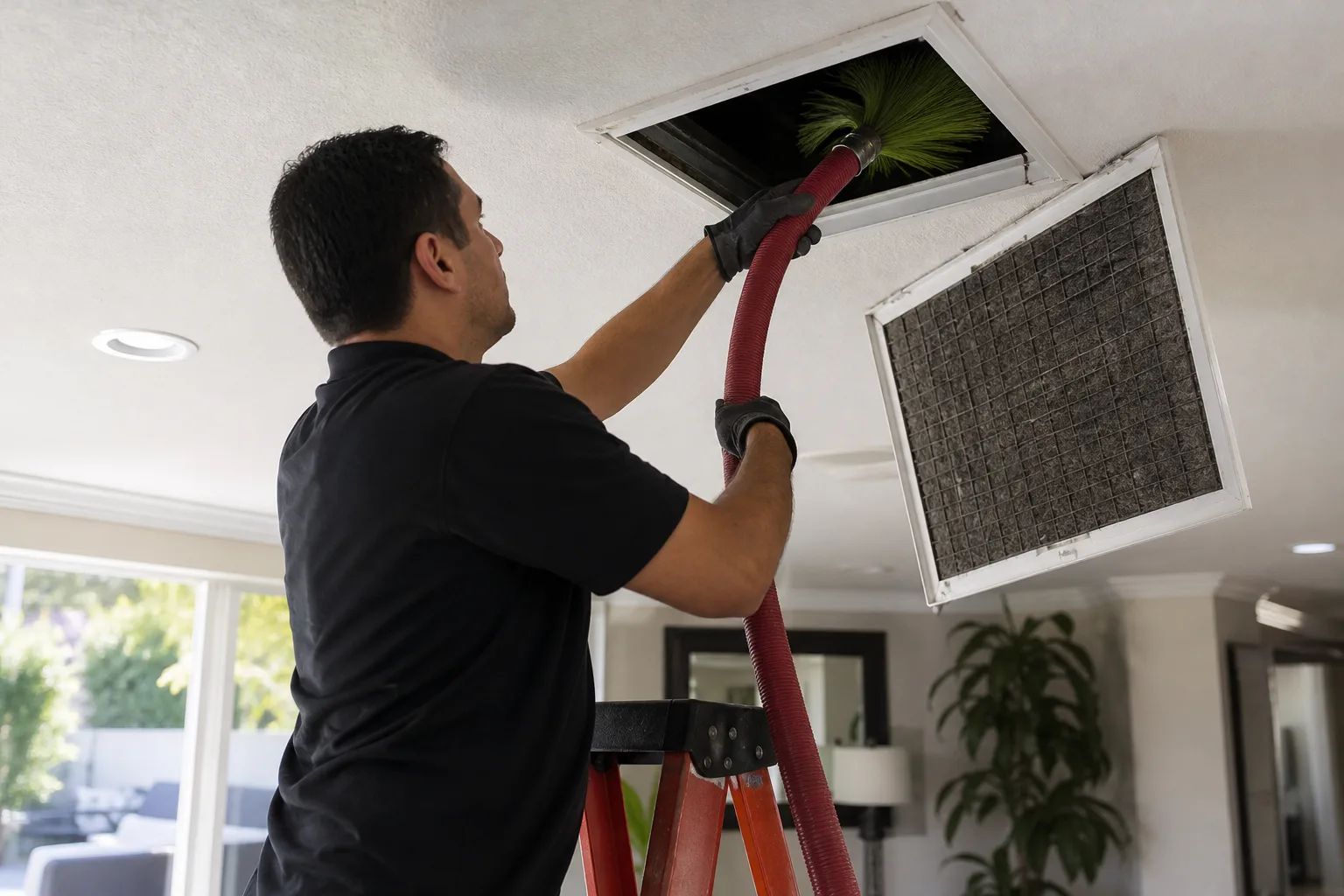
A camera inspection up front flips that. You know before the equipment starts what’s cleanable and what isn’t, and you get a written plan instead of a surprise. It’s the same principle behind using professional-grade equipment in the first place: the work only counts if the system can handle it. That’s why we run Rotobrush and Nikro systems rather than consumer vacuums, and why the inspection comes first.
For a system that passes inspection, a proper air duct cleaning addresses the whole path, not just the visible registers.
The Partial Replacement Option Most Homeowners Don’t Know About
The repair-or-replace question is usually framed as all-or-nothing, and it almost never is. In most Cypress homes, only some of the ductwork is failing. The rest is fine.
Partial replacement means replacing only the deteriorated sections, typically the trunk lines or the specific flex runs that failed inspection, while cleaning the accessible metal sections that still have integrity. You get a system that can actually hold clean air, without paying to tear out ductwork that’s still doing its job.
When partial replacement makes sense:
- One or two runs are crushed, collapsed, or have separated liner, and the rest tested fine
- The trunk line is failing but the branch runs are intact
- The duct layout itself is sound and just needs new materials in specific spots
When it usually doesn’t:
- Liner failure is widespread across most of the system
- Joints are failing throughout, not in one area
- The original layout is undersized or badly designed for the house
This is also where our Duct Repair & Sealing service earns its keep. We can clean the sound sections, replace the failed ones, and seal the whole system without you calling a second contractor. The same visit covers duct integrity and HVAC cleaning so the air handler and coil are addressed too.
When Leakage Testing Should Decide It for You
If your real complaint is that the system runs harder than it used to, or that some rooms never get comfortable, cleaning alone may not fix it. Duct leakage is the number to check. A blower door or duct blaster test measures how much conditioned air is escaping before it reaches your rooms.
When leakage shows losses above roughly 15 to 20 percent, cleaning the ducts won’t meaningfully improve system performance. You’re paying to clean a system that’s dumping a meaningful share of its air into the attic. In that case, sealing and repair come first, and cleaning follows.
Leakage testing isn’t something every cleaning company offers or thinks to mention. If your ducts are dirty and your system is also underperforming, ask for the test before you commit to a cleaning.
When to Call a Pro
Some of this you can check yourself. Pop a register cover and look inside with a flashlight. You’ll see dust, maybe some debris. What you can’t see from there is liner separation, collapsed runs, and joint condition up in the attic.
Call a professional when:
- You see liner peeling, fragments, or insulation fibers inside the register boot
- Airflow is noticeably weak in some rooms and hasn’t improved after a filter change
- You notice musty odors when the system runs
- You’re not sure whether the ductwork can handle a cleaning at all
We answer 24/7. Fast dispatch from 7am to 7pm, Sunday through Friday.
Related services in Cypress: if your dryer is taking longer to dry clothes, that’s a separate airflow path worth checking with dryer vent cleaning.
The Bottom Line
In Cypress, the clean-versus-replace decision comes down to three physical conditions, not the calendar. If the liner is bonded, the joints hold, and the insulation is attached, cleaning is money well spent. If any of those fail, cleaning alone postpones the inevitable, and a partial replacement of just the failing runs is often the smarter and less expensive path.
Camera inspection first. Leakage testing when performance is the complaint. Partial replacement when only part of the system has failed. That sequence protects your money and gets you air you can actually trust.
If you’re in Cypress and need help, Cypress Air Duct Cleaning Co offers free estimates. Call (844) 625-7168. We answer 24/7. Fast dispatch from 7am to 7pm, Sunday through Friday.
Frequently Asked Questions
You know from a camera inspection, not from the age of the ducts. If the liner is intact, joints hold, and insulation is attached, cleaning works. If the liner is peeling, runs are collapsed, or insulation has separated, replacement of those sections is the right call.
Yes. Cleaning deteriorated flex duct can dislodge insulation fragments and collapsed liner sections that then circulate through the system. That’s why inspection comes before cleaning.
Partial replacement is common and often the better option. Replacing only the failed trunk lines or flex runs while cleaning the sound metal sections usually costs less than a full replacement and gets the same result when the rest of the system tested fine.
When duct leakage testing shows losses above roughly 15 to 20 percent, cleaning alone won’t meaningfully improve system performance. Sealing and repair come first. Call (844) 625-7168 for an exact quote. Estimates are free.
Written by the team at Cypress Air Duct Cleaning Co.
Need Air Duct Cleaning Help?
Call Cypress Air Duct Cleaning Co - the local pro we connect you with is licensed and insured, with free written estimates in Cypress.
(844) 625-7168